

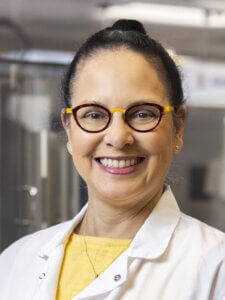
Robin Patel, MD, D(ABMM), FIDSA, FACP, F(AAM), FAAAS
Elizabeth P. and Robert E. Allen Professor of Individualized Medicine, Professor of Medicine, Professor of Microbiology
Director, Infectious Diseases Research Laboratory
Co-Director, Bacteriology Laboratory
Chair of Education, Department of Laboratory Medicine and Pathology
Consultant, Division of Clinical Microbiology, and Division of Public Health, Infectious Diseases, and Occupational Medicine
Mayo Clinic
1. What is your specialty and your primary area of focus in your therapeutic area?
I am board certified in infectious diseases (ABIM) and medical microbiology (ABP and ABMM). My work focuses on improvement of next-generation diagnostic techniques for infectious diseases and understanding antimicrobial resistance through a clinical lens. I espouse the use of diagnostics as ‘theranostics’.
2. When did you join the ARLG?
I joined the ARLG at its inception (i.e., I was part of the original application).
3. Why is the mission of ARLG important to you?
In my clinical infectious diseases practice, I was struck by how antimicrobial resistance affected the patients I cared for. For some patients, we have no treatment. Others may not receive the treatment they need, and yet others are over-treated because of clinical fear of antimicrobial resistance. I strongly feel that these challenges must be addressed through research; the ARLG’s mission is fully aligned with mine.
4. Please tell us about your contributions to the ARLG, e.g., the roles you’ve held and the projects and groups you’ve supported.
Director, Laboratory Center (2019-present)
Director of Diagnostics and MASTERMIND (2015-2019)
Chair, Diagnostics and Devices Subcommittee (2013-2015)
Member, Mentoring Committee
Member, Diagnostics Scientific Subcommittee
Member, Executive Committee
Member, Steering Committee
5. In your role with the ARLG, who have you mentored and how were you able to support or guide their career in AMR?
I provide mentorship through service on the ARLG Mentoring Committee and also on individual projects. Diagnostics and laboratory testing are involved in many (almost all) ARLG projects, and these projects involve trainees, early-stage investigators, and ‘trialists-in-training’. One example of a mentee is (now Professor) Ritu Banerjee, who led BCID, RAPIDS-GN and, most recently, FAST.
6. In your opinion, what are some of the most impactful achievements of the ARLG?
The ARLG has changed clinical practice in many ways, including defining which therapeutics to use in specific patients and at what point in their clinical course, as well as how to administer them (e.g., dose, duration, route of administration). The ARLG has also defined how to use diagnostics to inform appropriate antibiotic use – so-called ‘theranostics’. Findings from the ARLG have informed clinical practice guidelines for both diagnostics and therapeutics.