PHAGE Trial Reached Database Lock

We are pleased to announce that the PHAGE study has successfully reached database lock. This Phase 1b/2 clinical trial investigated the safety profile and microbiological activity of bacteriophage therapy in individuals with cystic fibrosis (CF) who are chronically colonized with Pseudomonas aeruginosa.

Led by Pranita Tamma, MD, MHS, University of Pennsylvania, and Robert Schooley, MD, University of California, San Diego, the trial enrolled 72 participants across 17 sites. Participants were randomized to receive either a single intravenous dose of a four-component bacteriophage cocktail or a placebo.

The data generated from the PHAGE study will deepen our understanding of optimal dosing strategies, safety considerations, and the expected microbiological responses associated with bacteriophage therapy. Importantly, these findings will guide the design of future clinical trials that aim to advance bacteriophage-based treatments for antimicrobial-resistant infections, extending beyond P. aeruginosa-related lung disease.

For additional details, consult the study record—and stay tuned for forthcoming results.

ARLG Fellow Natalie Mackow, MD, MSCR, Receives SHEA Trainee Award at IDWeek

Congratulations to ARLG Fellow Natalie Mackow, MD, MSCR! Dr. Mackow received the SHEA Trainee award at IDWeek 2025 for her abstract, “Using a novel Anaerobic Activity Index to assess risk for poor outcomes in burn patients in a burn intensive care unit.”

Dr. Mackow’s research aims to inform antibacterial therapy practices in patients with severe burns to reduce the prevalence of antibacterial resistance, which may be applicable to prevention approaches in other critically ill patient populations.

“Systemic antibiotic therapy is an important, potentially modifiable, risk factor for antibacterial resistance in this vulnerable patient population,” says Dr. Mackow. “Additionally, a novel tool to improve our definition of the anti-anaerobic activity of antibacterials has the potential to be utilized broadly in clinical studies and clinical practice, once validated.”

Learn more about Dr. Mackow’s research and how an ARLG Fellowship supported her work to improve outcomes for patients with severe burns in her ARLG Mentee Spotlight.

DOTS Study Results Discussed in NEJM Journal Watch

In a recent article, “DOTS: Optimism Around a ‘Negative’ Dalbavancin Trial,” Dr. Paul Sax summarizes the results of the DOTS study and why the findings are important.

Researchers for the DOTS study wanted to learn if two doses of dalbavancin, a long-lasting antibiotic often used to treat severe, bacterial skin infections, could work better than the standard peripherally inserted central catheter (or PICC line) antibiotic treatment for patients hospitalized for complicated Staphylococcus aureus bloodstream infections. The study results showed that although dalbavancin was not better at treating bloodstream infections, it worked as well as the standard therapy with fewer patients having to stop or change treatment due to side effects.

“So yes, DOTS was ‘negative’ on its primary outcome,” said Dr. Sax. “But it also showed that dalbavancin performs about as well as what we do now, with far less infrastructure: no PICC, no daily infusions, no vancomycin levels, fewer moving parts.”

Learn more about these important findings to improve patient outcomes for antibiotic-resistant infections in the ARLG news and the DOTS Summary of Results.

ARLG at IDWeek 2025

IDWeek 2025 is here! Whether you’re attending in person in Atlanta, GA or online, you can hear some of ARLG’s top leaders and experts discuss the latest AMR topics.

You won’t want to miss this year’s SHEA Lectureship, which was awarded to ARLG’s Mentoring Committee Chair, Anthony Harris, MD, MPH. This award recognizes his important contributions to the fields of health care epidemiology, infection prevention, and antimicrobial stewardship through his leadership and mentorship. Dr. Harris will give his lecture, “Where is the true north of infection control?” on Tuesday, October 21 at 4:45 p.m. ET.

Check out the ARLG member sessions and presentations in the tables below, or view the full schedule and on-demand content at IDWeek.org.

Sessions

DayTime (ET)Session TitlePresentation TitleModeratorsSpeakers
10/19/202510:45 - 11:30 amPW07 – Expanding Your Influence to Improve Antibiotic Use in Outpatient Settings Advancing Outpatient Stewardship in Health SystemsRitu Banerjee
10/19/202510:50 am - 12:15 pmPW04 – Fellows’ Day WorkshopCareers in ResearchCesar Arias
10/19/20252:40 – 3:15 pm2 – Beyond the 101: Pondering Perplexing Prescribing IssuesCan We Use Ceftriaxone Susceptibility to Interpret Susceptibility to Third-Generation Cephalosporins?Pranita Tamma
10/19/20253:45 – 5:30 pm8 – Opening Plenary: Reflection and Renewal: Advancing Public Health in Challenging TimesYohei Doi
10/20/20258:00 – 9:00 am15 – New Antimicrobials in the PipelineDavid van Duin
10/20/20258:00 – 8:30 am17 – These Blind Mice: When Bench Doesn’t Meet Bedside Optimizing Dosing Strategies: Insights From Systems Pharmacology and Experimental ModelsGauri Rao
10/20/20258:00 – 9:00 am18 – Top 10 Papers in Antimicrobial ResistanceYohei Doi
10/20/202510:55 - 11:20 am24 – Applying Next-Generation Sequencing to Clinical Treatment and PreventionCases in Genotype-Phenotype in the Microbiology Laboratory: What Clinician Need to KnowAmy Mathers
10/20/202510:30 - 11:45 am25 – Blood and Guts: Microbiome DiscoveriesDavid van Duin
10/20/202510:30 - 11:45 am30 – Lessons Learned in Biopreparedness and Biocontainment: Lassa Fever in the MidwestYohei Doi
10/20/20252:21 – 2:39 pm64 – Out With the Old, in With the New: Time to Update the Management of Staphylococcus aureus infectionsShould Ceftobiprole Replace Ceftaroline in the Management of Persistent Staphylococcal Bacteremia?Nicholas Turner
10/20/20251:45 – 3:00 pm 72 – Late Breaking Trial Results for Viral and Bacterial InfectionsYohei Doi
10/20/20253:15 – 4:30 pm 84 – Diagnostic Clinical Cases: What Do I Do With This Test Result?Ritu Banerjee
10/20/20253:15-4:30 pm87 – Extra, Extra New Info on Treating and Preventing RSV and InfluenzaAngelique Boutzoukas
10/20/20253:15-4:30 pm88 – New Anti-Infective AgentsPranita Tamma
10/20/20253:15-4:30 pm84 – Commonalities and Differences in Antimicrobial Treatment of Resistant PathogensYohei Doi
10/21/20258:00 – 9:00 am99 – Diagnostic Trials: Past and FutureRobin Patel, Ritu Banerjee
10/21/20258:00 – 8:30 am99 – Diagnostic Trials: Past and FutureEvaluation of Infectious Disease Diagnostics: Innovative Study Designs to Assess Test PerformanceMichael Satlin
10/21/20258:30 – 9:00 am99 – Diagnostic Trials: Past and FutureEvaluation of Infectious Disease Diagnostics: Study Designs to Assess Impact on Clinical OutcomesSarah Doernberg
10/21/20258:00 – 9:00 am104 – Pediatric Antimicrobial Resistance: Key Updates for the Busy ClinicianLatania Logan, Pranita Tamma
10/21/20258:30 – 9:00 am104 – Pediatric Antimicrobial Resistance: Key Updates for the Busy ClinicianUpdates in Gram-Negative BacteriaAngelique Boutzoukas
10/21/20259:15 -10:00 am107 – Maxwell Finland LectureYohei Doi
10/21/20259:35 -10:00 am107 – Maxwell Finland LectureAntimicrobial Resistance at the Bedside: Translating Science into Patient OutcomesCesar Arias
10/21/20251:45 – 3:00 pm157 – Cavities, Appys, and CLABSis, Oh My! Perspectives From Our Surgery and Radiology ColleaguesLatania Logan
10/21/20251:45 – 3:00 pm162 – Fresh New Results On Old and New VaccinesAhmed Babiker
10/21/20251:45 – 3:00 pm163 – Lowering Barriers to Diagnostics Access to Reduce Health Inequalities and Improve OutcomesRitu Banerjee
10/21/20253:15 – 4:30 pm171 – New Antibiotics, Untapped Potential: Exploring the Underuse of Recently Approved AgentsThomas Lodise
10/21/20254:05 – 4:30 pm172 – Bug to Drug: Translating Mechanisms of Antimicrobial Resistance to Treatment of Challenging InfectionsTranslational Antimicrobial Resistance Research in Low-Resource SettingsJose Munita
10/21/20253:15 – 4:30 pm173 – Challenging Cases in Immunocompromised HostMichael Satlin (panelist)
10/21/20255:25 – 5:55 pm183 – SHEA LectureshipWhere is the True North of Infection Control?Anthony Harris
10/21/20254:45 – 6:00 pm184 – Stanley A. Plotkin Lecture in VaccinologyLatania Logan
10/22/20258:00 –8:20 am191 – One Size Fits One: Toward Individualized Management of Infectious DiseasesMolecular Diagnostics to Refine Duration of Therapy for Blood Stream Infection: S. aureusVance Fowler
10/22/202510:30 -10:55 am197 – Clinical Trials That Will Change Your PracticeTrials in Bacteriology That May Change Your PracticeAmy Mathers
10/22/20251:45-3:00 pm241 – Advances in Managing Antimicrobial ToxicitiesAmit Pai
10/22/20253:15 – 4:30 pm257 – Cracking the Code of Resistance: A Deep Dive Into Metallo-Beta-Lactamase From Bench to BedsideYohei Doi, Amy Mathers
10/22/20253:15 – 3:40 pm257 – Cracking the Code of Resistance: A Deep Dive Into Metallo-Beta-Lactamase From Bench to BedsideUnmasking Resistance: Epidemiology and Diversity of MBLsMaria Mojica
10/22/20253:15 – 4:30 pm259 – Driving Better Decisions: Incentivizing Diagnostic StewardshipRitu Banerjee
10/22/20253:15 – 4:30 pm266 – Why Do We Do This? Exploring the Data Behind Long-Established Practices in IDDouble Coverage; Do We Need It?Kerry LaPlante

Posters & Oral Presentations

DayTime (ET)TitlePresenting AuthorAuthors
10/20/202511:18 – 11:30 am78 – Oral Presentation: Aerobactin Gene iuc as a Virulence Marker Associated with Increased Mortality in Carbapenem-Resistant Klebsiella pneumoniae infections: A Multicenter Observational Cohort Study from ChinaJianping JiangJiang JJ, Li Y, Komarow L, Boutzoukas A, Yu Y, Xiao Y, Gao H, Liu Z, Fowler Jr VG, Kreiswirth BN, Chen L, Wang M, van Duin D, for the Antibacterial Resistance Leadership Group
10/20/202512:15-1:30 pmP-476 – Poster Presentation: Risk Factors for Mortality in Children and Young Adults with Carbapenem-Resistant Gram-Negative InfectionsAngelique BoutzoukasBoutzoukas AE, Tian J, Komarow L, Ge L, Wang M, Arias C, Guttierrez JMO, Alenazi T, Liu Z, Paterson D, Satlin M, Doi Y, Fowler V, van Duin D
10/21/202512:15 – 1:30 pmP-1292 – Poster Presentation: Clinical and Genomic Features of Colistin Resistance Among Carbapenem-resistant Acinetobacter baumannii Isolated From Global Clinical SamplesMadison StellfoxStellfox ME, Komarow L, Patel R, van Duin D, Van Tyne D, Doi Y
10/21/202512:15 – 1:30 pmP-1296 – Poster Presentation:
Impact of Metallo-Beta Lactamases on Outcomes in Patients with Carbapenem-Resistant Gram-Negative Infections
Angelique BoutzoukasBoutzoukas AE, Shao W, Jiang J, Kanj S, Wang M, Salcedo Mendoza S, Marimuthu K, Liu Z, Komarow L, Fowler V, Kreiswirth B, Arias C, Doi Y, Paterson D, Satlin M, Bonomo R, van Duin D
10/21/202512:15 – 1:30 pmP-1302 – Poster Presentation:
Klebsiella pneumoniae Phage Susceptibility Testing (PST): Comparison Between a Spot Plaque Assay and an Optical Density-Based Liquid Assay
Luz CuelloCuello L, Patel R
10/22/202510:45 – 11:00 am556 – Oral Presentation:
Using a novel Anaerobic Activity Index to assess risk for poor outcomes in burn patients in a burn intensive care unit
Natalie MackowMackow NA, Komarow L, Napravnik S, Bartelt L, DiBiase LM, Williams B, Williams FN, Weber DJ, van Duin D


DOTS Study Results Published

Close Up of IV DripThe results of an ARLG study, Dalbavancin as an Option for Treatment of S. aureus Bacteremia (DOTS), were recently published in JAMA.

In this study, researchers compared the safety and efficacy of dalbavancin to the standard of care in treating patients with complicated Staphylococcus aureus bloodstream infections. Antibiotics for serious S. aureus infections are typically delivered over 4-6 weeks through a central catheter, or PICC line, that requires specialized care and may lead to other complications like additional infections. Results indicate that dalbavancin, delivered in two doses one week apart, can be as effective as the standard of care while avoiding the potential risks associated with a PICC line. These findings are significant because better, safer treatments are needed for S. aureus bloodstream infections, which are common in hospitals and can be deadly.

To learn more about these important findings to improve patient outcomes for antibiotic-resistant infections, read the DOTS summary of results, listen to the JAMA Author Interviews podcast, and check out the Duke Health press release.

ARLG Retiree Spotlight – Beth Evans, Lead Clinical Research Associate

Beth Evans, CCRA, Lead Clinical Research Associate

Our best wishes go out to Beth Evans, CCRA, on her retirement after 29 years at Duke Clinical Research Institute (DCRI). Since 2016, she has worked with ARLG as a lead CRA on many studies including  HABP/VABP, MDRO, SNAP, CRACKLE-2, POP, SHREC, and PHAGE.

“My passion was to work closely with site personnel, training them and guiding them through the day-to-day study activities,” Beth states. “I loved the details of each study and helping sites understand and follow the protocol. I was often called ‘Eagle Eyes’ for finding details others may have missed.”

In 2021, Beth channeled her passion and expertise into working on the PHAGE study with Drs. Robert “Chip” Schooley and Pranita Tamma to evaluate bacteriophages as a promising alternative to antibiotics. Her experience on the MDRO study as a site manager for the U.S. and Asia-Pacific regions was equally exciting as she traveled to provide study team training at multiple sites across China and Australia. “It was inspiring to see sites across the globe unite on one mission – the fight against antimicrobial resistance,” she states. “Given the growing threat of antibiotic-resistant bacteria, contributing to research that combats this global health issue is very important to me. ARLG is a world leader in the prevention and treatment of infections that could one day directly benefit me or someone close to me.”

Now that Beth has retired, she has no intention of sitting still. She will direct her passion and energy into hiking, paddleboarding, and playing tennis. During the next two years, she hopes to hike the tallest point in every U.S. state. When she isn’t outdoors, Beth plans to spend more time playing piano and may also take banjo lessons.

New ARLG Supplement Published in Clinical Infectious Diseases

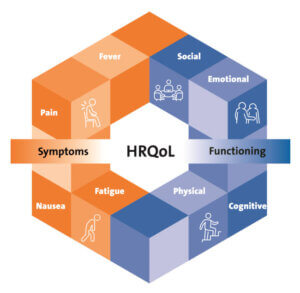
The ARLG published a new supplement in the journal of Clinical Infectious Diseases titled “In Pursuit of Patient-Centered Antibacterial Trials: Listening to, Learning From, and Leveraging the Patient Perspective.” The supplement includes eight articles authored by ARLG members that describe several challenges and opportunities for measuring health-related quality of life (HRQoL) in patient care and in clinical studies of infectious diseases.

Read the supplement.

Dr. Angelique E. Boutzoukas’ Manuscript Selected as a Top Transplant ID Paper

Angelique E. Boutzoukas, MD, MPH, Department of Pediatrics, Duke University

Dr. Angelique E. Boutzoukas’ manuscript, “Carbapenem-Resistant Enterobacterales in Solid Organ Transplant Recipients,” was selected as one of the year’s top transplant infectious diseases papers at the 2025 World Transplant Congress. Congratulations on this recognition of your important work, Dr. Boutzoukas!

Congratulations, Dr. Marc Bonten!

Marc Bonten, MD, PhD, UMC Utrecht

Marc Bonten, MD, PhD, was recently appointed Vice-Dean of Education and Director of the Education Center (Research) at the University Medical Center (UMC) Utrecht, the Netherlands. In his role as CEO of the European Clinical Research Alliance for Infectious Diseases, Dr. Bonten collaborates with the ARLG to address the global antibacterial resistance crisis.

Read more about Dr. Bonten’s contributions to the field of antibacterial resistance.