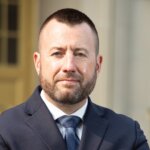

Emily Lydon, MD, Receives Emerging Generation Award from the American Society for Clinical Investigation (ASCI)

Emily Lydon, MD, an ARLG Early-Stage Investigator Seed Grant recipient, was honored with an Emerging Generation Award from the American Society for Clinical Investigation (ASCI) for her career in research. This award highlights Dr. Lydon’s meaningful contributions to the field of infectious diseases as an early-career physician-scientist.

Dr. Lydon’s work focuses on using multi-omic profiling and advanced computational methods to better understand host-pathogen interactions and develop innovative diagnostic tests for lower respiratory tract infections, particularly in immunocompromised patients. As an ARLG mentee, Dr. Lydon led the Integrated Metagenomic PROfiling to adVancE LRTI diagnosis and stewardship in lung transplant (IMPROVE-LRTI) study. This research aims to differentiate true infection from microbial colonization in lung transplant recipients, create a host-microbial classifier for accurate LRTI diagnosis, and assess how antibiotic exposure affects antimicrobial resistance genes in these patients. If successful and implemented in clinical practice, this test would help to combat the antibacterial resistance crisis by decreasing the number of antibiotics unnecessarily prescribed to lung transplant recipients.

Dr. Lydon is currently a post-doctoral fellow in Infectious Diseases at the University of California, San Francisco, where she is continuing her important work to improve precision diagnostics for infectious diseases, promote antimicrobial stewardship, and improve clinical outcomes for immunocompromised and transplant patients with infectious diseases.

Read the ASCI Emerging Generation Award article to learn more about Dr. Lydon’s research for which she earned this important recognition of her work to improve care for patients with infectious diseases.

ARLG at ESCMID 2026

Every year, the Congress of the European Society of Clinical Microbiology and Infectious Diseases (ESCMID) brings together experts in infectious diseases and clinical microbiology, including many ARLG members. ESCMID Global 2026 is being held on April 17-21 in Munich, Germany, with live streaming of sessions for virtual attendees. Check out the list below of ARLG members who are speaking or chairing events.  For the full schedule with more details about each of these sessions, visit the ESCMID Global Congress program page.

ARLG Member Presentations at ESCMID Global 2026

DateTime (CEST)Session Number & TitlePresentation TitleSpeakersChair
4/17/20268:30-10:30EWOO5: Prevention and treatment for specific intra-abdominal infectionsSelective decontamination: benefits and resistance developmentNick Daneman
4/17/202617:30-18:30ME029: Overcoming challenges to implementing system-wide antimicrobial stewardshipSara Cosgrove
4/18/202613:30-14:30JS001: Late-breaking research from JAMA: novel insights on treating and preventing infections around the worldDalbavancin pharmacokinetics in complicated Staphylococcus aureus bacteraemia. A secondary analysis of the DOTS randomised clinical trialThomas Holland
4/18/202613:30-14:30JS001: Late-breaking research from JAMA: novel insights on treating and preventing infections around the worldRapid susceptibility testing for bacteremiaRitu Banerjee
4/18/202616:15-18:15EW071: Adaptive platform trials in infectious diseasesBALANCE PLUS: a platform trial answering challenging questions on Gram-negative infectionsNick Daneman
4/18/202616:15-18:15SY063: Cracking the phage code: from clinical insights to precision designDesigning clinical trials around phage therapyPranita Tamma
4/19/202611:00-12:00SY086: Therapeutic management of carbapenem-resistant Gram-negative infections: where are we globally?Pranita Tamma
4/19/202613:30-14:30FO096: Communicating science today: new media, new platformsAngela Huttner
4/20/20268:30-10:30SY115: Interconnected microbiomes and resistomes across One HealthHospital microbiomes as hotspots for emerging resistance: surveillance-to-interventionAmy Mathers
4/20/202613:30-15:30LB007: The trial runAngela Huttner, David Paterson
4/20/202613:30-15:30SY132: Innovative methodologies for advancing PK/PD studiesMulti-Omics approaches to personalise and improve antibiotic efficacyGauri Rao
4/21/20268:30-10:30CGR: Clinical Grand RoundsDavid Paterson
4/21/202611:00-12:00OS135: Harnessing wastewater for surveillance of AMRAmy Mathers
4/21/202613:30-15:30EW169: UTIs off the beaten path: complex patients, complex choicesAngela Huttner

ARLG Member Posters at ESCMID Global 2026

DateTime (CEST)Abstract/Poster TitleAuthorsPresenter
4/20/202616:51E0784: ePoster Flash - Randomised, double-blind, placebo-controlled trial of the safety and microbiological activity of bacteriophage therapy in cystic fibrosis participants chronically colonised with Pseudomonas aeruginosaP. Tamma, T. Hamasaki, M. Souli, D. Van Tyne, D. Pride, S. Nayak, K. Moon, E. Raterman, K. Greenwood- Quaintaince, D. Ellison, A. Filippov, M. Nikolich, T. Lodise, D. Conrad, A. Jaunarajs, Z. Wintrob, D. Albon, P. Allyn, T. Barto, J. Billings, L. Caverly, A. Graham, W. Hunt, R. Jain, J. Koff, K. Mcbennett, D. Miller, P. Mohabir, B. Morrissey, K. Patel, J. Wang, N. West, M. Bates, J. Leonard, G. Sah, M. Chiu, B. Evans, H. Geres, C. Koscianski, U. Rappo, J. Fackler, H. Chambers, S. Evans, R. Patel, V. Fowler, R. SchooleyPranita Tamma
4/20/202612:00-13:30P1539: Poster - Fast Antibiotic Susceptibility Testing for Gram-Negative Bacteremia (FAST): Multinational Randomized Controlled Trial Evaluating a Rapid Phenotypic Susceptibility Test Performed on Positive Blood CulturesR. Banerjee, L. Komarow, Y. Li, D. Mau, A. Dodd, H. Geres, K. Greenwood-Quaintance, A. Adler, S. Baliga, M. Chowers, G. Chrysos, M. Paul, S. Pournaras, DS. Regueiro, S. Evans, H. Chambers, V. Fowler Jr, R. Patel, on behalf of the Antibacterial Resistance Leadership Group
4/19/202612:00-13:30P2785: Poster - Pharmacokinetics of Dalbavancin in Complicated Staphylococcus aureus Bacteremia: PKonnecting the DOTSTP. Lodise, T. Hamasaki, NA Turner, N. Fishbane, L. Ge, Q. Wu, L. Zeng, T. Riccobene, R. Patel, U. Rappo, S. Evans, VG. Fowler Jr, HF. Chambers, and TL. Holland on behalf of the Antibacterial Resistance Leadership Group
4/19/202612:00-13:30P3094: Poster - Economic Outcomes with Dalbavancin versus Standard of Care in Complicated Staphylococcus aureus Bacteremia: Findings from the DOTS TrialY. Li, SD. Reed, DK. Pasquale, NA. Turner, R. Drew, P. Cook, S. Zaharoff, VG. Fowler, TL. Holland

TATFAR Manuscript Highlights ARLG Phage Research

A new manuscript in Nature Communications discusses the global effort to support phage therapy and features ARLG’s research along with other collaborative initiatives. “Considerations and perspectives on phage therapy from the Transatlantic Taskforce on Antimicrobial Resistance (TATFAR)” details discussions from key meetings in 2023 and 2024 where experts and regulatory authorities from the United States, Canada, the European Union, Norway, and the United Kingdom examined the scientific, regulatory, and logistical challenges surrounding phage therapy.

The publication aims to fill critical research gaps, support therapeutic research and development, and accelerate the translation of phage therapeutics into clinical practice.
This TATFAR initiative to advance phage therapy was collaborative effort among several domestic and international agencies including the National Institute of Allergy and Infectious Diseases (NIAID), the US Food and Drug Administration (FDA), UK Medicines and Healthcare products Regulatory Agency (MHRA), European Medicines Agency (EMA), Health Canada, and the European Commission’s Health Emergency Preparedness and Response Authority (HERA).

The insight provided by TATFAR helps to clarify the current landscape of phage therapy on a global scale and guide its direction in the future. These and other collaborative efforts inform the broader goal to advance evidence-driven approaches that will combat the threat of antimicrobial resistance worldwide.

Read the full publication

Dr. Lodise Receives ASHP Foundation Award

Thomas Lodise, PharmD, PhD

Thomas Lodise, PharmD, PhD, who serves as the ARLG Network’s Pharmacokinetic Scientific Lead, received the 2025 Literature Award for Sustained Contributions from the American Society of Health-System Pharmacists (ASHP) Foundation. With over 250 peer-reviewed articles, Dr. Lodise has made significant contributions to biomedical literature on treatments for antimicrobial resistant (AMR) infections.

Congratulations to Dr. Lodise for this recognition of his impactful work to combat the antibacterial resistance crisis and improve patient care!

Read more

ARLG Experts Share Strategies to Combat Antibacterial Resistance

ARLG Co-Principal Investigator, Vance Fowler, MD, and Helen Boucher, MD, ARLG Executive Committee Member and Innovations Working Group Chair, shared their insights on the current state of antimicrobial resistance (AMR) in a recent article published by the Association of American Medical Colleges (AAMC). The article, “Where are we in the battle against antibiotic-resistant infections?,” also included their strategies to combat this global health crisis.

Dr. Boucher, an Infectious Disease (ID) Specialist, Dean of the Tufts University School of Medicine, and Chief Academic Officer of Tufts Medicine, emphasized practicing infection prevention and antibiotic stewardship to decrease rates of antibiotic-resistant bacteria in hospitals. The development of diagnostic tests to determine if an infection is bacterial or viral is another promising avenue to combat AMR. However, Dr. Boucher notes, it has been challenging to determine how best to use the tests and make them cost effective.

Dr. Fowler, ID Specialist and Professor of Medicine at Duke University School of Medicine, highlighted the need for renewed investment in the development of antibiotics by the pharmaceutical industry, which could be supported through the PASTEUR Act if passed by Congress. Bacteriophage therapy is emerging as a strong potential treatment for antibiotic-resistant infections. Dr. Fowler served as Chair of a blinded independent adjudication committee to evaluate the results of a phase 2 trial conducted at UCLA. The study showed promising results for a phage “cocktail” used in combination with standard of care antibiotics to treat patients with complicated Staphylococcus aureus infections.

The AAMC article also cites antimicrobial use in livestock and agriculture and ID workforce shortages as other areas that need to be addressed to combat the AMR crisis.

Read the article on the AAMC website.

ARLG Steering Committee Members Receive Recognition for Significant Contributions to AMR

Congratulations to the ARLG Steering Committee members who received recognition as one of Clarivate’s Highly Cited Researchers in 2025! Clarivate uses a meticulous process to identify researchers who have significantly influenced their fields during the past year. Learn more about the important work these leaders in antimicrobial resistance are doing to improve patient care by advancing the prevention, diagnosis, and treatment of infections caused by antibiotic-resistant bacteria:

PHAGE Trial Reached Database Lock

We are pleased to announce that the PHAGE study has successfully reached database lock. This Phase 1b/2 clinical trial investigated the safety profile and microbiological activity of bacteriophage therapy in individuals with cystic fibrosis (CF) who are chronically colonized with Pseudomonas aeruginosa.

Led by Pranita Tamma, MD, MHS, University of Pennsylvania, and Robert Schooley, MD, University of California, San Diego, the trial enrolled 72 participants across 17 sites. Participants were randomized to receive either a single intravenous dose of a four-component bacteriophage cocktail or a placebo.

The data generated from the PHAGE study will deepen our understanding of optimal dosing strategies, safety considerations, and the expected microbiological responses associated with bacteriophage therapy. Importantly, these findings will guide the design of future clinical trials that aim to advance bacteriophage-based treatments for antimicrobial-resistant infections, extending beyond P. aeruginosa-related lung disease.

For additional details, consult the study record—and stay tuned for forthcoming results.

ARLG Fellow Natalie Mackow, MD, MSCR, Receives SHEA Trainee Award at IDWeek

Congratulations to ARLG Fellow Natalie Mackow, MD, MSCR! Dr. Mackow received the SHEA Trainee award at IDWeek 2025 for her abstract, “Using a novel Anaerobic Activity Index to assess risk for poor outcomes in burn patients in a burn intensive care unit.”

Dr. Mackow’s research aims to inform antibacterial therapy practices in patients with severe burns to reduce the prevalence of antibacterial resistance, which may be applicable to prevention approaches in other critically ill patient populations.

“Systemic antibiotic therapy is an important, potentially modifiable, risk factor for antibacterial resistance in this vulnerable patient population,” says Dr. Mackow. “Additionally, a novel tool to improve our definition of the anti-anaerobic activity of antibacterials has the potential to be utilized broadly in clinical studies and clinical practice, once validated.”

Learn more about Dr. Mackow’s research and how an ARLG Fellowship supported her work to improve outcomes for patients with severe burns in her ARLG Mentee Spotlight.

DOTS Study Results Discussed in NEJM Journal Watch

In a recent article, “DOTS: Optimism Around a ‘Negative’ Dalbavancin Trial,” Dr. Paul Sax summarizes the results of the DOTS study and why the findings are important.

Researchers for the DOTS study wanted to learn if two doses of dalbavancin, a long-lasting antibiotic often used to treat severe, bacterial skin infections, could work better than the standard peripherally inserted central catheter (or PICC line) antibiotic treatment for patients hospitalized for complicated Staphylococcus aureus bloodstream infections. The study results showed that although dalbavancin was not better at treating bloodstream infections, it worked as well as the standard therapy with fewer patients having to stop or change treatment due to side effects.

“So yes, DOTS was ‘negative’ on its primary outcome,” said Dr. Sax. “But it also showed that dalbavancin performs about as well as what we do now, with far less infrastructure: no PICC, no daily infusions, no vancomycin levels, fewer moving parts.”

Learn more about these important findings to improve patient outcomes for antibiotic-resistant infections in the ARLG news and the DOTS Summary of Results.

DOTS Study Results Published

Close Up of IV DripThe results of an ARLG study, Dalbavancin as an Option for Treatment of S. aureus Bacteremia (DOTS), were recently published in JAMA.

In this study, researchers compared the safety and efficacy of dalbavancin to the standard of care in treating patients with complicated Staphylococcus aureus bloodstream infections. Antibiotics for serious S. aureus infections are typically delivered over 4-6 weeks through a central catheter, or PICC line, that requires specialized care and may lead to other complications like additional infections. Results indicate that dalbavancin, delivered in two doses one week apart, can be as effective as the standard of care while avoiding the potential risks associated with a PICC line. These findings are significant because better, safer treatments are needed for S. aureus bloodstream infections, which are common in hospitals and can be deadly.

To learn more about these important findings to improve patient outcomes for antibiotic-resistant infections, read the DOTS summary of results, listen to the JAMA Author Interviews podcast, and check out the Duke Health press release.