

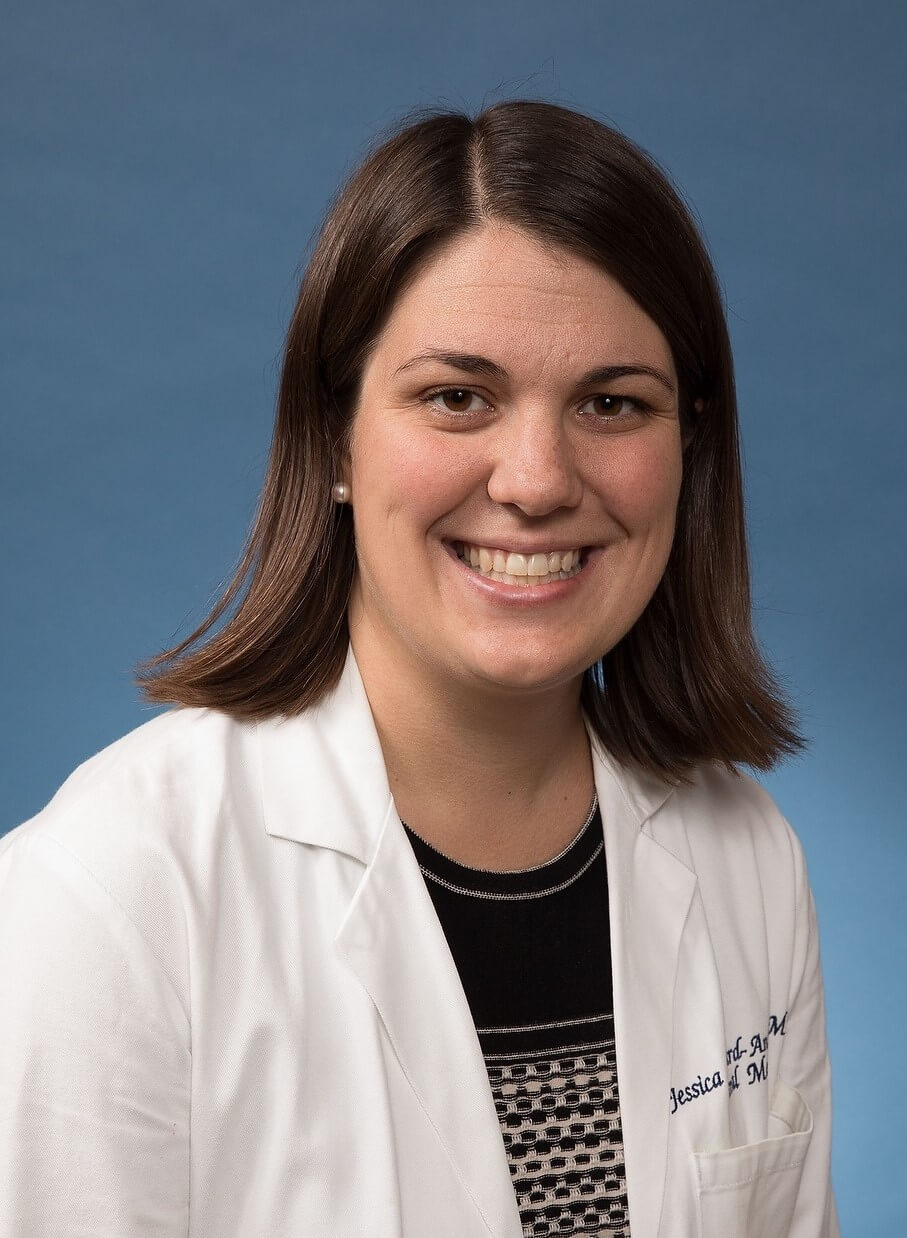
Jessica Howard-Anderson, MD, MSc
Infectious Diseases Fellow
Division of Infectious Diseases
Emory University School of Medicine
About my role in the ARLG
I was awarded an ARLG fellowship beginning in January 2020 which provides full salary support for my research as well as funding for tuition and relevant training activities for 18 months. As an ARLG fellow, I participate as a non-voting member in the ARLG Steering committee and Gram-negative committee. This has provided an opportunity to learn a great deal from hearing experienced ARLG investigators discuss research ideas and priorities.
Mentoring from many ARLG leaders and guidance from the Innovations Work Group has taught me more about the Desirability of Outcome Ranking (DOOR) analytic method. This has given me the opportunity to lead the ARLG DOOR Exploratory Endpoint Task Force aimed at standardizing DOOR endpoints for future registration trials for novel antibiotics.
About my research
My primary ARLG research project focuses on patients with carbapenem-resistant Pseudomonas aeruginosa (CRPA). Using population-based surveillance data from the Georgia Emerging Infections Program, I am analyzing clinical outcomes comparing patients initially treated with ceftolozane/tazobactam to those initially treated with colistin via a DOOR analysis. I am also learning laboratory techniques to test for colistin heteroresistance in patients with CRPA and will estimate the effect of heteroresistance on clinical outcomes. Through this project, I have been able to collaborate with and receive mentorship from many different ARLG investigators who are doing similar research in multidrug-resistant Gram-negative infections.
Why is this research important?
Pseudomonas aeruginosa is a common cause of healthcare-associated infections. Patients with CRPA infections have poor outcomes including high in-hospital and 90-day mortality, prolonged length of stay, and a greater likelihood of discharge to long-term care facilities. Treatment of CRPA is challenging since resistance can be mediated through multiple different mechanisms and there are limited therapeutic options available for treatment.
One of the goals of our research is to help understand which antibiotics maximize benefit and minimize toxicities for patients with extremely drug-resistant CRPA. This work supports ARLG’s mission to prioritize research that impacts the treatment of infections caused by multidrug-resistant bacteria. By analyzing patient outcomes and comparing different antibiotic treatment regimens we hope to help provide some answers to this question. Additionally, my research into colistin heteroresistance may also have implications for which antibiotics can be effectively used for treatment.
Impact of the ARLG funding to my career
The ARLG fellowship has been enormously beneficial to my career. By funding my fellowship salary, I have completely protected research time where I can focus on gaining the skills and generating additional data that I will need to apply for future career development awards. Only halfway through my fellowship, I have already learned a tremendous amount about how to design and implement large clinical studies, including innovative trials in the field of antimicrobial resistance.
The mentorship I have received this year has been critical to my success. At Emory, I have a large mentoring team including Jesse Jacob, Monica Farley, Sarah Satola, and David Weiss as well as colleagues from the CDC. The ARLG has also provided me with numerous opportunities to gain mentorship from and collaborate with ARLG investigators including those in the Gram-negative Committee and DOOR Exploratory Endpoint Task Force. They have supported my work and helped me advance my career as an independent researcher in antibacterial resistance.
Lastly, as an ARLG fellow I have funding to take infectious diseases epidemiology courses through the Rollins School of Public Health at Emory University which will be helpful to advance my academic career.
My experience has shown me that the ARLG network is a group of passionate, intelligent, and collaborative investigators who are leading the field in antibacterial resistance. They are eager to engage, educate, and support trainees and see this as a critical part of their mission.