

Todd McCarty, MD at the University of Alabama at Birmingham
Todd McCarty, MD, Associate Professor, Infectious Diseases Fellowship Program Director, University of Alabama at Birmingham (UAB)
1. What is your specialty and your primary area of focus?
- Infectious Diseases
- Medical mycology
- Transplant/immunocompromised infectious diseases
- Medical education
2. Please tell us a bit about UAB.
The University of Alabama at Birmingham (UAB) is an academic and state institution that is affiliated with the Veterans Affairs (VA) Health Care System. UAB is the 5th largest hospital in the country with ~1400 beds. It serves as a main provider of medical care for the Birmingham metro area that is the most populous region in the state spanning 5 counties. UAB is a state referral center for complex care including: solid organ transplantation, acute leukemia, stem cell transplantation, mechanical circulatory device support, and many other conditions.
3. Please tell us about your research team—sub- or co-investigators, key study coordinators, research nurses, and others—who play a vital role in ARLG studies.
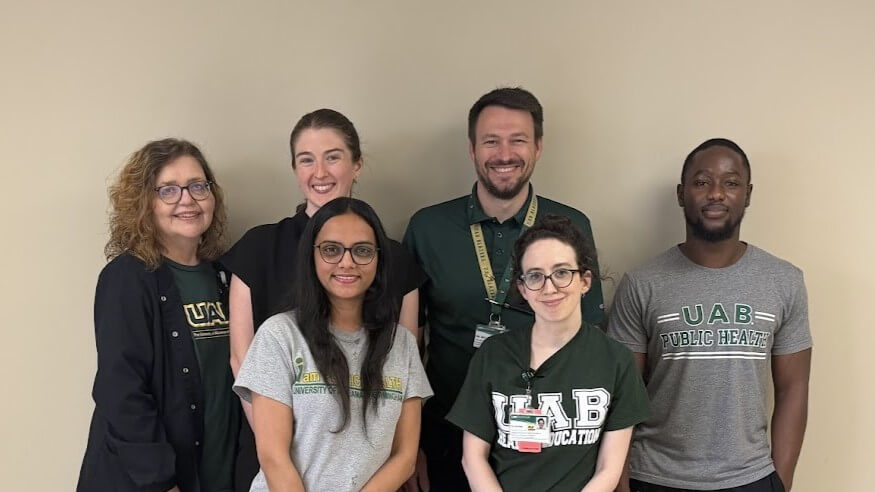
Cesar Berto, MD, and Emily Wong, MD, are two new junior ID faculty who are finding opportunities for engagement with clinical trials. Our primary research nurse is Sharon May. We have multiple research coordinators – Kate Ennis (who will be starting medical school in the upcoming academic year), Chinonso Udensi, and Shayna Bryan. Our team also includes data specialist Drashti Shah, regulatory coordinator Debbie Lowman, and administrator Holly Downing.
4. Which ARLG projects have you participated in as a clinical trial site?
We have contributed to the DOTS clinical trial on dalbavancin, CRACKLE II, EVADE, PROVIDE, SCOUT-CAP, and MDRO Network studies, as well as a variety of studies for staphylococcal bacteremia and pneumonia.
| CRACKLE II | Consortium on Resistance against Carbapenems in Klebsiella pneumoniae and other Enterobacteriaceae |
| DOTS | Dalbavancin as an Option for Treatment of S. aureus Bacteremia |
| EVADE | Effort to Prevent Nosocomial Pneumonia caused by Pseudomonas aeruginosa in Mechanically Ventilated Subjects |
| POP-MDRO | Prospective Observational Pseudomonas study - Multi-Drug Resistant Organism Network |
| PROVIDE | Prospective Observational Study to Validate the Pharmacodynamic InDex for Vancomycin among Patients with MRSA Bloodstream Infections |
| SCOUT-CAP | Short Course Outpatient Antibiotic Therapy for Community-Acquired Pneumonia in Children |
| SNAP-MDRO | Study Network of Acinetobacter baumannii as Carbapenem-Resistant Pathogen as part of the Multi-Drug Resistant Organism Network |
5. Why is the mission of ARLG important to you?
The relative infrequency of many of the pathogens and conditions studied by the ARLG make single center studies challenging. Creating large networks with a variety of centers and patients means the generalizability of the data produced is far superior.
6. Is there anything else you’d like to share about your work with the ARLG?
The ARLG has provided a wonderful opportunity for me to grow my research career in a way that allows for a flexible time commitment and engagement with a wide variety of studies. While I did not take advantage of the opportunity to propose new studies or protocols, knowing that option was available to me if I wanted it was incredibly valuable.