

Ebbing Lautenbach, MD, MPH, MSCE
Ebbing Lautenbach, MD, MPH, MSCE
Robert Austrian Professor of Medicine
Professor of Epidemiology
Chief, Division of Infectious Diseases
Senior Scholar, Center for Clinical Epidemiology and Biostatistics
Perelman School of Medicine, University of Pennsylvania
1. What is your specialty and your primary area of focus?
My primary specialty is infectious diseases (ID). My research program focuses on the epidemiology, treatment, and prevention of healthcare-associated infections (HAIs), particularly those due to antibiotic-resistant pathogens. My work has concentrated on assessing the clinical and molecular epidemiology of antibiotic-resistant organisms in acute care, post-acute care, and community settings, both domestically and globally.
My research has also focused on elucidating patterns of antibiotic use, developing antibiotic stewardship research methods, and testing antibiotic stewardship and infection prevention interventions.
I have been the recipient of a Midcareer Investigator Award in Patient-Oriented Research (K24) to build on my research in antimicrobial resistance and provide support for additional time in mentoring trainees and junior faculty pursuing careers in clinical investigation. I have mentored over 75 individuals pursuing training in patient-oriented research including medical students, residents, fellows, and junior faculty and have been recognized by numerous teaching and mentoring awards.
2. Please tell us a bit about your institution.
I work within the University of Pennsylvania Health System (UPHS) and the Perelman School of Medicine (PSOM) at Penn. These entities are integrated within the overall framework of Penn Medicine.
Penn Medicine serves more than 7 million patients across Philadelphia, southeastern and south-central Pennsylvania, and central and southern New Jersey. The system combines seven hospitals with major academic and tertiary referral centers, offering broad clinical expertise that includes cancer care, cardiology, orthopedics, ophthalmology, neurology and neurosurgery, transplantation, emergency medicine, and other advanced and community-based services.
More than 300 outpatient practices serve 22 urban and rural counties across southeastern Pennsylvania and central and southern New Jersey. Together, they support more than 8.2 million visits annually, involving approximately 2 million unique patients.
The Veterinary Hospital of the University of Pennsylvania, the nation’s busiest veterinary teaching hospital, records more than 38,000 small animal visits annually and maintains dedicated facilities for diagnostic microbiology, molecular diagnostics, and clinical research. Our team collaborates with veterinary colleagues to study the household transmission of antibiotic-resistant organisms between people and animals.
3. Please tell us about your research team—sub- or co-investigators, key study coordinators, research nurses, and others—who play a vital role in ARLG studies.
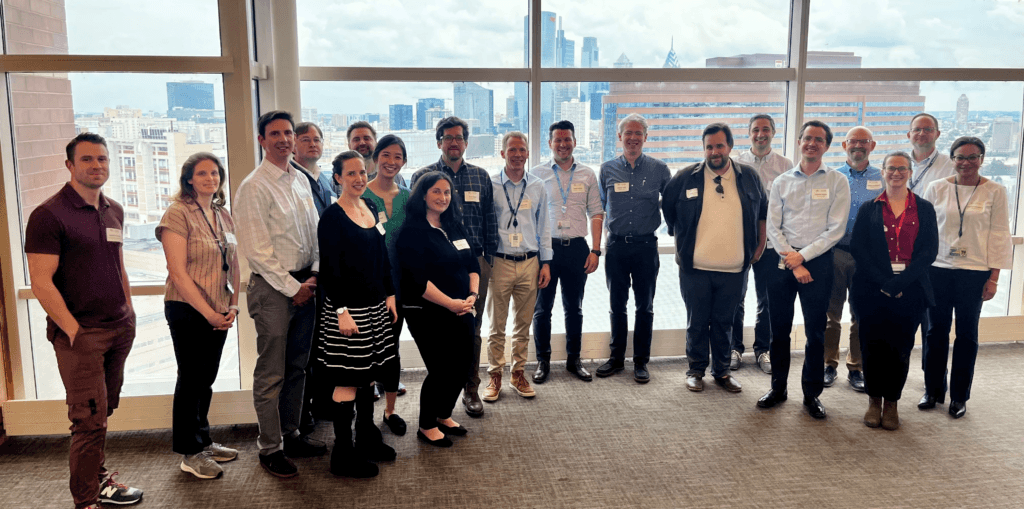
I have been blessed to have an amazing group of co-Principal Investigators (PIs) and co-investigators throughout my career. These include current Penn colleagues: Brendan Kelly, MD, MSCE; Matt Ziegler, MD, MSCE; Lauren Dutcher, MD, MSCE; Michael David, MD, PhD; Alyssa Mezochow, MD, MSCE; Julie Szymczak, PhD; Stephen Cole, DVM; and Warren Bilker, PhD. I have also had the privilege of working with fantastic colleagues at the Children’s Hospital of Philadelphia (CHOP) including: Jeff Gerber, MD, PhD; Katie Chiotos, MD, MSCE; Susan Coffin, MD, MPH; and Pranita Tamma, MD, MHS.
We have a large research group, with many talented people serving in various roles over the years. However, I would highlight a few senior team members specifically. Pam Tolomeo, MPH has served as a project manager in my group for over 20 years and brings a vast wealth of experience in clinical research and study conduct. Anne Jaskowiak, MS, has served as a project manager in my group for over 10 years and has an expansive knowledge and track record in clinical trials. Together, Pam and Anne oversee a large research operation including various types of studies, numerous principal investigators, and many staff.
4. Which ARLG projects have you participated in as a clinical trial site?
I served as the ARLG PI for the TRAP-LRTI study, and as PI for the Multi-Drug Resistant Organism (MDRO) Network CRACKLE II and SNAP studies. The University of Pennsylvania was also an enrolling site for other ARLG studies, including two projects led by mentees.
| TRAP-LRTI NCT03341273 |
Targeted Reduction of Antibiotics using Procalcitonin in a multi-center, randomized, blinded, placebo-controlled, non-inferiority study of azithromycin treatment in outpatient adults with suspect Lower Respiratory Tract Infections (LRTI) and a procalcitonin level of < 0.1 ng/mL |
| CRACKLE II NCT03646227 |
Consortium on Resistance against Carbapenems in Klebsiella pneumoniae and other Enterobacteriaceae |
| SNAP-MDRO NCT03646227 |
Study Network of Acinetobacter baumannii as Carbapenem-Resistant Pathogen as part of the Multi-Drug Resistant Organism Network |
| SCOUT-CAP NCT02891915 |
Short Course Outpatient Antibiotic Therapy for Community-Acquired Pneumonia in Children |
| CEF_BP (mentee project) | Ceftriaxone Breakpoint |
| ArROw (mentee project) | Antibiotic Resistance in Organ Transplant |
Visit the ARLG Studies page to learn more and read study publications.
5. Have you been involved with the ARLG in another capacity?
I serve on the ARLG Steering Committee, and also serve as a member of the Mentoring Committee. Previously, I served as the Chair of the Antibiotic Stewardship Scientific Committee.
6. Why is the mission of ARLG important to you?
Throughout its history, my research program has focused on the clinical and molecular epidemiology of antibiotic resistance. I have studied the impact of antibiotic resistance as well as strategies to curb the further rise of resistance. As such, the mission of the ARLG is very much aligned with the focus of my group.
The ARLG provides a framework and infrastructure within which highly important and impactful trials can be done. There are many studies that have been done in the ARLG that would not otherwise have been possible. The ARLG has also provided an environment within which junior investigators have been able to learn, mature, and develop their own careers. The nurturing of junior careers is clearly one of the elements of the ARLG that will have a long-lasting impact on the field.
7. Is there anything else you’d like to share about your work with the ARLG?
Beyond the ground-breaking scientific work done by the ARLG, it has been incredibly rewarding to have the opportunity to work with so many talented people within the ARLG many of whom I would not have otherwise had the opportunity to meet or collaborate with. The ability to bring in such a wide array of talented and collegial investigators has been an amazing benefit of working with the ARLG.