

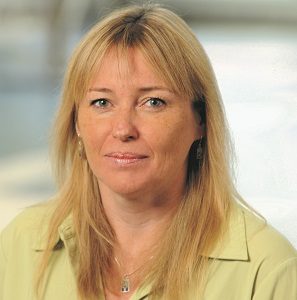
Heather R Cross, DPhil, FAHA, RAC
Director of the ARLG Clinical Operations Center
Associate Director of the ARLG Scientific Leadership Center
Duke Clinical Research Institute, Duke University School of Medicine
1. What is your specialty and your primary area of focus in your therapeutic area?
I specialize in project management and operational oversight of clinical trials and programs. I have worked in the infectious disease therapeutic area for the past 16 years.
2. When did you join the ARLG?
At its inception. I was involved in the proposal writing for the first cycle of the ARLG grant when it was created back in 2013.
3. Why is the mission of ARLG important to you?
ARLG’s mission is unique. We serve clinicians and patients primarily. This is a different focus than the work of pharmaceutical companies, and the U.S. government through the Biomedical Advanced Research and Development Authority (BARDA), who run registrational trials and gain marketing clearance for new antibacterial products. Registrational trials are typically conducted in common infections such as urinary tract infections and, once marketed, there is little information on how a clinician should best utilize these new medicinal products for other types of infections. ARLG fills this gap by undertaking trials utilizing new and existing antibacterials in indications such as bloodstream infections and pneumonia.
Additionally, ARLG conducts trials to compare new treatments to standard of care to see if the new treatment is actually better. We undertake pharmacokinetic studies to determine appropriate dosing in different populations such as stem cell transplant and ICU patients, and we perform studies testing new diagnostics and their impact on clinical outcomes.
Ultimately, ARLG completes clinical trials that no other entities can or will complete and generates knowledge critical to the successful treatment of patients with bacterial infections.
4. Please tell us about your contributions to the ARLG, e.g., the roles you’ve held and the projects and groups you’ve supported.
In the first grant cycle, my title was ARLG Program Leader. In this current grant cycle, my titles are Director of the ARLG Clinical Operations Center and Associate Director of the ARLG Scientific Leadership Center. I am a member of the ARLG Executive, Steering, and Publication Committees. In these roles, I oversee the operations of all the ARLG clinical trials and studies, liaise with the ARLG Laboratory and Statistical and Data Management Centers, manage the finances for the ARLG program, complete grant management activities, and oversee the management of the committees and mentees. We have a large and talented team of DCRI staff handling the day-to-day details of all these activities and I try to support them as best I can!
5. In your role with the ARLG, who have you mentored and how were you able to support or guide their career in AMR?
Over the past 13 years of the ARLG I have had the privilege of working with many talented clinical operations staff at DCRI and have watched them grow and progress in their career paths to senior project leader and manager roles. I have ‘mentored’ many of these individuals, but I prefer to describe it as providing challenge and responsibility, trusting and letting each person shine, and supporting and guiding when needed.
It is also extremely gratifying to support young clinicians in their careers through the ARLG mentoring program. There are several examples of ARLG supporting investigators from their fellowship through to their first clinical trial and on to being a senior investigator mentoring others. I have had the honor of working directly with several of these investigators throughout their journey.
6. In your opinion, what are some of the most impactful achievements of the ARLG?
We have made so many critical impacts over the past 13 years. We undertook one of the first randomized controlled trials utilizing bacteriophage as a treatment, developed a MASTERMIND trial design that resulted in approval of two diagnostics, supported over 30 mentees, and informed clinicians on the best use of minocycline, vancomycin, dalbavancin, ceftazidime-avibactam/aztreonam, and fosfomycin. It is humbling to work with such a talented, creative, and committed group of investigators and staff. I am grateful every day.