
IDWeek 2022: Featured ARLG Sessions and Posters

It’s that time of year again! Many of ARLG’s top leaders and experts will be at IDWeek 2022 discussing the latest AMR topics. Whether you are attending virtually or in person, plan ahead to join your favorite sessions.

Be sure you catch this year’s Maxwell Finland Lecture delivered by ARLG primary investigator, Helen Boucher, MD, FACP, FIDSA, on October 20. Use the guide below to find more exciting sessions and posters you won’t want to miss.

Learn more and view OnDemand content at IDWeek.org

IDWeek 2022 ARLG Sessions

DayTime (EDT)Session TitlePresentation titleModeratorsSpeakers
Oct. 1811:30 am - 12:30 pmPW02 - Best Practices for Antibiotic Stewardship ProgramsPseudomonas aeruginosa and Enterobacter cloacae: Our Unsung NemesesPranita Tamma
Oct. 182:25 - 3:40 pmPW02 - Best Practices for Antibiotic Stewardship ProgramsPro-Con Debate: FQ Prophy in HCTGhady Haidar
Oct. 183:00 - 4:00 pmPW03 - Research Training Programs, Careers and Grant Writing Strategies for ID Physician-ScientistsAdditional Funding Opportunities Outside of NIH Presentations with Q&ASara Cosgrove
Oct. 1910:45 am - 12:00 pmPW04 - Fellows' Day WorkshopCareers in ResearchCesar Arias
Oct. 208:00 – 9:00 am10- Effective Collaborations Between Stewards and the Microbiology LaboratoryPranita Tamma
Oct. 208:00 – 8:30 am10- Effective Collaborations Between Stewards and the Microbiology LaboratoryHow Stewards Can Transform the Science of Antibiotic Breakpoints Into Clinical Practice RecommendationsAmy Mathers
Oct. 208:00 – 9:00 am18 - New Antimicrobials and ID Diagnostics in the Pipeline - BacterialCesar Arias, David van Duin
Oct. 209:15 – 10:00 am19 - Maxwell Finland LectureRunning to Stand Still: Progress and Perils with AMRHelen Boucher
Oct. 2010:30 – 11:45 am21 - Diagnostic Clinical CasesJennifer Dien Bard (panelist)
Oct. 2010:30 – 11:45 am22 - Clinical Trials That May Change Your PracticeThomas Holland
Oct. 2011:20 – 11:45 am29 - What's New in Fungal Therapeutics and Diagnostics in Transplant?Antifungal Susceptibility Testing ChallengesMariana Castanheira
Oct. 2010:30-11:45 am32 - MDROs Across the SpectrumAnthony Harris
Oct. 201:45-3:00 pm71 - Circadian Clock, Hormones and Host Defenses Against InfectionsAnne-Catrin Uhlemann
Oct. 201:45-3:00 pm78 – Antimicrobial Clinical Trials (Bacterial and Viral)Pranita Tamma
Oct. 203:15-4:30 pm89 - New Battles With Old Foes: Addressing Syphilis and Drug-Resistant Neisseria gonorrheaAnne-Catrin Uhlemann
Oct. 203:15-4:30 pm95 - Diagnostic Stewardship for Common SyndromesSonali Advani
Oct. 218:00 – 8:30 am104 - Overdiagnosis of Infections: Cracking the Code!The Urine StorySonali Advani
Oct. 218:00 – 8:30 am105 - Slow and Steady: Insights Into Nontuberculous Mycobacteria and TreatmentAnne-Catrin Uhlemann
Oct. 218:00 –8:30 am106 - Still the One? Debating Vancomycin as First Line MRSA Agent in New Era of AUC/MIC Dosing and MonitoringPro-Vancomycin Is Still the OneMarc Scheetz
Oct. 218:00 –9:00 am110 - New Antimicrobials and ID Diagnostics in the Pipeline - DiagnosticsAngela Caliendo
Oct. 2110:30-11:45 am114 - Clinical Controversies in the Treatment of S. aureus BacteremiaThomas Holland
Oct. 2110:30-11:45 am115 - Ditching the Dogma: Antimicrobial Stewardship Myth BustersPranita Tamma
Oct. 2110:55-11:20 am115 - Ditching the Dogma: Antimicrobial Stewardship Myth BustersMyth: Trimethoprim-Sulfamethoxazole Is Not Effective for the Treatment of Skin and Soft Tissue Infections Involving Beta-Hemolytic StreptococciSarah Doernberg
Oct. 2112:15-12:45 pm157 - Rapid Fire Poster Session: Updates in DiagnosticsPatricia Simner
Oct. 211:45-3:00 pm163 - Double Trouble: How Viruses and Bacterial Interactions Affect the Pathogenesis of PneumoniaAnne-Catrin Uhlemann
Oct. 212:35-3:00 pm166 - Hot Topics in Pediatric Infectious DiseasesThe Role of the Microbiome in Childhood InfectionsMatthew Kelly
Oct. 211:45-3:00 pm167 - Improving the Identification of SepsisThe Stewardship of Sepsis: A Report From the IDSA Sepsis Task ForceSara CosgroveSara Cosgrove
Oct. 211:45-2:10 pm170 - What the Big Beasts of Hospital Epidemiology and Antimicrobial Stewardship Did During COVID-19MDROs in the COVID EraRobert Bonomo
Oct. 211:45-3:00 pm171 - Endocarditis & BSIDavid van Duin
Oct. 211:45-3:00 pm175 - Updates in DiagnosticsAhmed Babiker
Oct. 213:15-4:30 pm179 - Bad Bug, Bad Bugs: Whatcha Gonna Do (2.0)?Ample Choices? Prescribing Considerations for AmpC β-lactamase-producing Enterobacterales (AmpC-E)Judith Anesi
Oct. 213:15-4:30 pm180 - Behind the Curtain: New Insights Into the Pathogenesis of Candida InfectionsAnne-Catrin Uhlemann
Oct. 213:15-4:30 pm181 - Follow-Up Blood Cultures in Bloodstream Infection: Who Needs 'Em?Thomas Holland
Oct. 213:15-4:30 pm185 - Promise and Perils of New Beta-Lactam AgentsYohei Doi
Oct. 214:05-4:30 pm185 - Promise and Perils of New Beta-Lactam AgentsConsiderations in the Micro LabJennifer Dien Bard
Oct. 228:00-9:00 am193 - Finding the Needle in the Haystack: New Biomarkers of InfectionsAnne-Catrin Uhlemann
Oct. 228:00-9:00 am195 - Oral Treatment of Osteoarticular Infections, Bacteremia and EndocarditisBusting 75 Years of ID Myths: Oral Antibiotic Therapy for Osteomyelitis, Bacteremia and EndocarditisBrad SpellbergBrad Spellberg
Oct. 2210:30-11:45 am209 - Putting the Value of ID Into PracticeCase VignetteCesar Arias
Wrap Up and Q&A
Oct. 221:45-3:00 pm249 - Disarming Bacterial Destruction: Toxins as Therapeutic TargetsAnne-Catrin Uhlemann
Oct. 221:45-3:00 pm254 - Optimizing Stewardship Interventions in Challenging PopulationsPranita Tamma
Oct. 222:35-3:00 pm255 - Perfectionism and the Fear of FailureLeadership, Perfectionism and ExpectationsLatania Logan
Oct. 223:15-4:30 pm263 - Knocking Out the Nonfermenters: Focus on Treatment Through Case ReviewYohei DoiMichael Satlin (Panelist)
Oct. 223:40-4:05 pm267 - 2022 IDSA Guideline UpdateIntra-Abdominal InfectionsRobert Bonomo
Oct. 224:05-4:30 pm267 - 2022 IDSA Guideline UpdateIDSA Guidance on the Treatment of Antimicrobial-Resistant InfectionsPranita Tamma


IDWeek 2022 ARLG Posters

Day, TimeNumberTitleAuthors
Oct. 22
12:15-1:30 pm
229Molecular and Clinical Epidemiology of Carbapenem-resistant E. coli isolates from different global regions (CRACKLE-2)Boutzoukas AE, Komarow L, Chen L, Baum K, Fowler V, Arias C, Hill C, Hanson B, Kreiswirth B, Wang M, Paterson D, Bonomo R, van Duin D
Oct. 22
12:15-1:30 pm
232Population Pharmacokinetics (PopPK) of Ceftazidime-Avibactam (CZA) in Combination with Aztreonam (ATM) in a Phase I, Open-Label Study in Healthy Adult Subjects (COMBINE)Lodise TP, O'Donnell JN, Balevic S, Liu X, Gu K, George J, Raja S, Zaharoff S, Schwager N, Fowler VG Jr., Chambers HF; Antibiotic Resistance Leadership Group
Oct. 22
12:15-1:30 pm
233Safety of Ceftazidime-Avibactam (CZA) in Combination with Aztreonam (ATM) in a Phase I, Open-Label Study in Healthy Adult Subjects (COMBINE)Lodise TP, O'Donnell N, Raja S, Balevic S, Guptill J, Schwager N, Zaharoff S, Fowler VG Jr., Ghazaryan V, Beresnev T, Wall A, Wiegand K, Chambers HF, Antibiotic Resistance Leadership Group

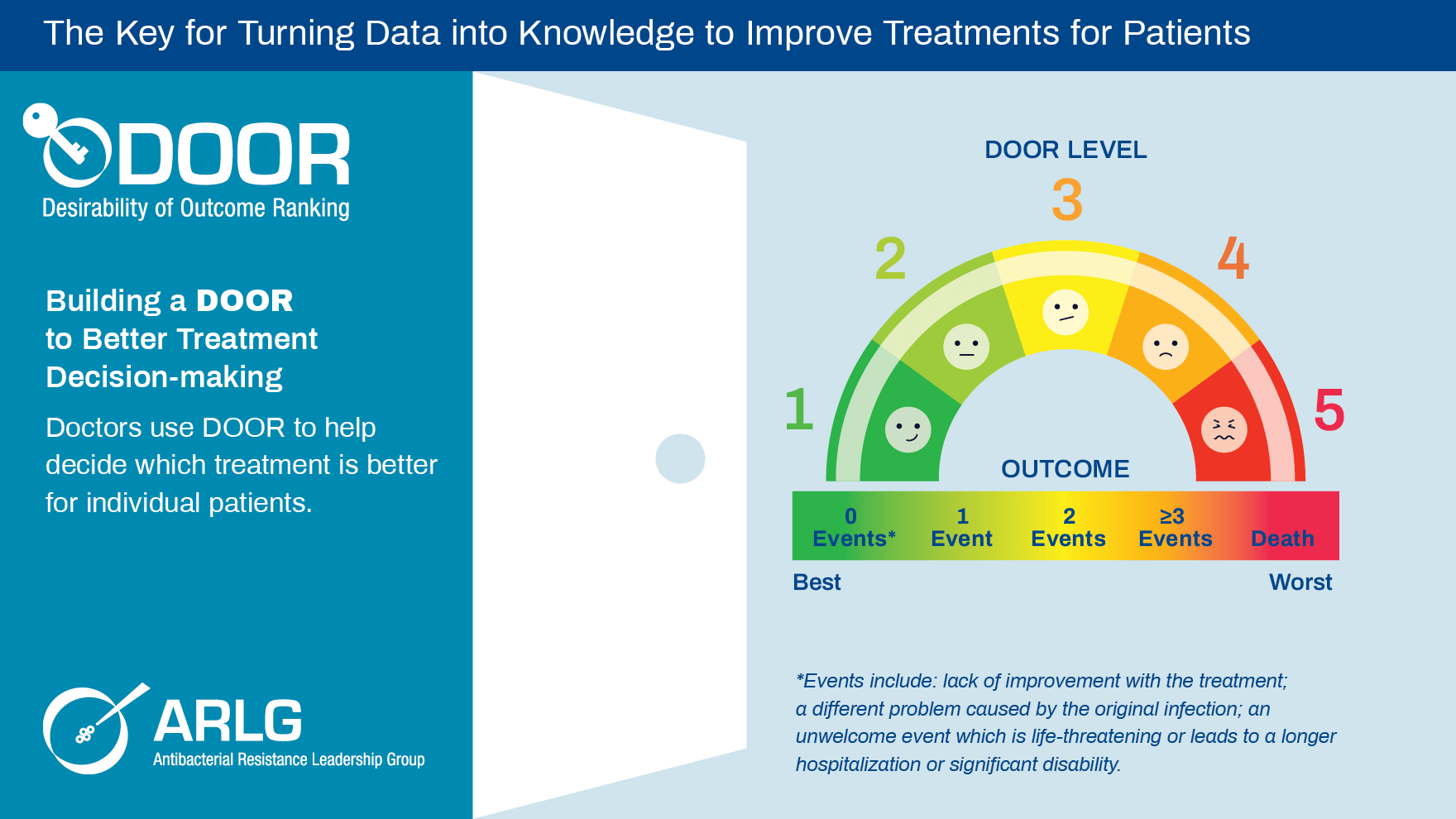
ARLG DOOR Turns Data Into Knowledge — Opens Opportunities to Improve Patient Treatment Plans

ARLG’s Desirability of Outcome Ranking (DOOR) is a novel paradigm for the design, analysis, and interpretation of clinical trials that allows doctors to create better treatment strategies by giving them a way to review data and compare the risks and benefits of different interventional options. Doctors can then discuss the pros and cons for each option and tailor the strategy to fit the patient.

Scott Evans, PhD, developed this innovative paradigm with support from members of ARLG’s Statistical and Data Management Center (SDMC) Toshimitsu (Toshi) Hamasaki, Lauren Komarow, and Carol Hill. The goal of DOOR is to give doctors and researchers a method for informed therapeutic selection based on a comprehensive patient-centric benefit-risk evaluation. Researchers can apply DOOR’s paradigm to the design, data monitoring, and analyses of any clinical trial or observational study to evaluate the patient experience and guide therapeutic decision-making.

Scott Evans, PhD

ARLG researchers first used DOOR in clinical studies for antimicrobial resistance, but now teams are benefitting by applying DOOR to studies in other disease areas such as COVID-19, tuberculosis, melioidosis, pulmonary artery disease, stroke prevention, status epilepticus, and maternal-fetal medicine.

Building a DOOR to Better Treatment Strategies

For doctors, the most important “real world” application of clinical trial data is to determine which therapeutic option is best for each patient. However, since randomized trial outcomes do not provide a clear way to review and compare data on patient-reported experiences, they often fail to provide the necessary evidence to inform day-to-day medical decision-making.

DOOR helps improve the real world applications of clinical trial data by correcting the usual arithmetic of analyzing outcomes separately. Instead of using patients to analyze outcomes, DOOR uses outcomes to analyze patient experiences.

DOOR bases therapeutic evaluations on a comprehensive assessment of patient-centric benefits and harms, which helps doctors address the most important clinical questions on the comparative value of interventions as they pertain to specific patients.

By providing a way to transcend this obstacle, DOOR advances the goal for more research studies yielding practical data doctors and patients can use to answer real world questions.

A DOOR for More Streamlined Study Data

ARLG researchers have used DOOR to enhance many completed studies.

  • CRACKLE I Study — illustrated that ceftazidime-avibactam was superior to colistin in the treatment of pneumoniae carbapenemase–producing CRE infections based on benefit-risk evaluations.
  • PROVIDE Study — illustrated that higher vancomycin doses, presumed to be more efficacious were not more efficacious and caused more acute kidney injury than lower doses in hospitalized patients with methicillin-resistant Staphylococcus aureus (MRSA) bacteremia.
  • SCOUT-CAP Trial — concluded that among children responding to initial treatment for outpatient CAP, a 5-day antibiotic strategy was superior to a 10-day strategy.
  • TRAP Trial — compared azithromycin treatment vs. placebo in outpatient adults with suspected lower respiratory tract infections and low procalcitonin levels.

Some current studies that incorporate DOOR include:

  • Dalbavancin as an option for treatment of aureus bacteremia (DOTS) clinical trial — a multicenter, randomized, assessor-blinded, superiority trial comparing two doses of dalbavancin with 4–8 weeks of standard intravenous antibiotic therapy for completion of therapy in patients with diagnosed with complicated S. aureus bacteremia, including definite or possible right-sided infective endocarditis, who have been treated with effective antibiotic therapy and with subsequent clearance of bacteremia prior to randomization to study treatment.
  • ARLG’s PHAGE Trial — a multi-center, randomized, double-blind, placebo-controlled trial of bacteriophage therapy in cystic fibrosis patients colonized with pseudomonas aeruginosa. DOOR is currently being used for the design, data monitoring and analysis of the study.

Through the DOOR: the Future of Trial Data

Although DOOR is already improving clinical trial conduction and the usability of data today, the paradigm has the potential to influence and advance the execution of research well into the future.  The Council for International Organizations of Medical Sciences is planning the release of a report on benefit-risk evaluation with recommendations that include DOOR concepts.

In order to improve access to DOOR, members of the ARLG team are currently building a series of interactive online tools that will help doctors and researchers easily conduct DOOR analyses and review the results. They are also developing similar tools that will help analyze the desirability of outcome ranking for the management of antimicrobial therapy (DOOR MAT) which is an analogue to DOOR for the design and analysis of diagnostic studies.


Tori Kinamon Featured on PFID Faces of AMR Series

Tori Kinamon

In June, the Partnership to Fight Infectious Disease (PFID) featured a profile of ARLG fellow Tori Kinamon whose journey surviving a methicillin-resistant Staphylococcus aureus (MRSA) infection inspired her to pursue a career as an infectious diseases physician and researcher.

The profile is part of PFID’s Faces of AMR series, which strives to raise awareness of antimicrobial resistance (AMR) by sharing stories of people who have battled this public health threat.

Tori’s journey began during a gymnastics team competition when she was a freshman at Brown University. Her team won the championships, but in the days that followed Tori began to feel increasing pain and swelling in her left leg along with flu-like symptoms. A visit to the emergency room revealed an abscess in her hamstring that eventually required eight surgeries, more than a month in the hospital, and antibiotic treatment for a MRSA infection that almost necessitated the amputation of her leg.

After trying several antibiotic treatment options, doctors found one that was effective, but later discovered that Tori’s kidneys did not tolerate it well. Luckily, Tori’s hospital had another antibiotic option available, daptomycin, which treated her infection without affecting her kidneys.

“I reflect quite frequently on how having that one extra drug in the stockpile had a significant impact on my outcome,” Tori said.

Tori’ s experience with AMR fueled a passion to advance infectious diseases treatment and research. Today, she is an MD Candidate at the Duke University School of Medicine and a recipient of the FDA Antibacterial Drug Resistance (DOOR) Fellowship. Tori has contributed her insight previously to educational presentations and articles including a July 2021 WebMD feature along with Vance Fowler, MD regarding the effect of the COVID-19 pandemic on AMR.


Read Tori’s full story on PFID’s Faces of AMR here.

Robin Patel Named by ISAC as 2022 Hamao Umezawa Memorial Awardee

Robin Patel, MD, Mayo Clinic

The International Society of Antimicrobial Chemotherapy (ISAC) announced it has selected Robin Patel to receive the 2022 Hamao Umezawa Memorial Award (HUMA). Dr. Patel serves as ARLG’s Laboratory Center Director and is the Director of the Infectious Diseases Research Laboratory at the Mayo Clinic.

Dr. Patel’s work focuses on developing improved diagnostic approaches to combat antibacterial resistance, researching the mechanisms of biofilm formation, and designing and conducting studies for new antibacterial treatment options. Her numerous career highlights include serving as president of the American Society for Microbiology, a council member for the National Institutes of Allergy and Infectious Diseases, and an associate editor for the Journal of Clinical Microbiology. She has published more than 500 peer-reviewed publications.

HUMA, which is ISAC’s highest award, recognizes outstanding contributions in the field of antimicrobial chemotherapy by a researcher, scientist, or clinician. Dr. Patel will receive her award medal, certificate, and 10,000 Swiss Francs during the 32nd International Congress of Antimicrobial Chemotherapy (ICC 2022) scheduled for November 70 – 30 in Perth, Australia. She will deliver the HUMA plenary lecture on “Microbial Theranostics – A Resistance Combatting Strategy”.

Read more

Robert Bonomo to Lead Coordinating Center for VA SHIELD

Robert A. Bonomo, MD

The U.S. Department of Veterans Affairs (VA) selected Robert Bonomo as the Director of the Coordinating Center for the VA Science and Health Initiative to Combat Infectious and Life-Threatening Diseases (VA SHIELD), a cental biospecimen and data repository.

Dr. Bonomo is Chief of the Medical Service and Director of the Geriatric Research Education and Clinical Center (GRECC) at the Cleveland VA Medical Center as well as a member of the ARLG Laboratory Center Consortium Team. His work in antibacterial resistance includes research on the mechanistic basis of resistance to beta-lactam antibiotics and beta-lactamase inhibitors, the molecular epidemiology of multidrug resistant Gram-negative bacteria, and the implementation of molecular diagnostics in clinical care of patients with infectious disease. Dr. Bonomo has received more than 70 honors and awards including the 2020 Mark Wolcott Award for Excellence in Clinical Leadership.

The VA SHIELD houses specimens and data related to COVID-19 and other emerging diseases to help VA investigators and other collaborators develop diagnostic, therapeutic, and preventative strategies for use in clinical care. The new initiative will support the VA’s national emergency preparedness efforts by helping to facilitate a faster, more coordinated response to emerging diseases.

“By understanding emerging disease data as it relates to large patient populations, VA can accelerate its research efforts to combat future outbreaks in a more coordinated, expedited fashion,” said Dr. Bonomo. “The Coordinating Center of VA SHIELD will be responsible for positioning VA to respond rapidly to national and international biological events and threats and to substantially contribute to clinical research and development”.

Read more

ECCMID 2022 On-Demand

Catch ECCMID 2022 while you still can! Your registration includes access to on-demand content until July 26, 2022. To help you plan, we’ve highlighted some presentations and speakers you won’t want to miss. Also, mark your calendars for May 19, 2022. Post-ECCMID online learning day, which is on the topic of Antimicrobial Resistance and Stewardship, is free for ECCMID registrants. View the Post-ECCMID Programme

Attend ECCMID 2022 On-Demand

DayTime (CEST)Session # and TitlePresentation # and TitleSpeakers
April 2316:15-18:15EW053 Educational Workshop
Opportunistic infections of the central nervous system
WO219 Infections of the CNS in solid organ transplant patientsJudith Anesi
April 257:15-8:15 ME125 Meet the Expert
ESCMID and IDSA treatment guidelines for MDR Gram-negative bacterial infections
MO532 Pranita Tamma
April 258:30-10:30SY136 Symposium
ESCMID Guidelines for the treatment of infections caused by multidrug-resistant Gram-negatives: a case-based approach
SO583 Cases of multidrug-resistant P. aeruginosaRobert Bonomo
April 2513:30-14:30SY163 Symposium
Recent top papers in transplant ID and haem/onc ID
SO678 SOT-IDDavid van Duin
April 267:15-8:15ME189 Meet the Expert
Azole-resistant Candida parapsilosis: a new nosocomial threat?
MO776Mariana Castanheira
April 267:15-8:15ME191 Meet the Expert
Duration of therapy: from what we know to what we do
MO780 Angela Huttner
April 267:15-8:15ME194 Meet the Expert
How I treat severe Stenotrophomonas maltophilia infections
MO787David van Duin
April 2619:15-20:45 EW229 Educational Workshop Behavioural science essentials for antimicrobial stewardsWO937 Antibiotic prescribing as a decision-making processSara Cosgrove

ARLG at the Texas Medical Center AMR & Stewardship Conference

ARLG experts will deliver presentations on a variety of topics during the 5th Annual Texas Medical Center AMR & Stewardship Conference. The event will take place online January 19 – 21. Use the guide below to help plan your conference sessions.

Register to Attend

ARLG AMR & Stewardship Conference 2022 Sessions

DayTimeSession TitlePresentation TitleModeratorsSpeakers
Jan. 197:30 - 8:20 a.m.Career Mentoring: Clinical Scientist PathwaySam Shelburne
Jan. 198:40 - 8:45 a.m.WelcomeCesar Arias
Jan. 198:45 - 9:10 a.m. ARLG and the Future of Clinical Research in Antimicrobial Resistance Vance Fowler
Jan. 193:30 - 4:30 p.m.Session 4: NIH Antimicrobial Resistance Leadership Group (ARLG) Early Stage Investigators Anthony Harris,
Henry Chambers
Jan. 193:30 - 4:45 p.m.DOOR analysis and cUTIJessica Howard-Anderson
Jan. 193:45 - 4:00 p.m.DOOR Endpoint Analysis in Intraabdominal Infection: FDA-NIH CollaborationTori Kinamon
Jan. 194:00 - 4:15 p.m.DOTS Trial: Dalbavancin as an Option for Treatment of Staphylococcus aureus BacteremiaNicolas Turner
Jan. 194:15 - 4:30 p.m.PHAGE TrialMaria Souli
Jan. 194:30 - 5:15 p.m.Session 5: Selected AbstractsSam Shelburne
Jan. 208:30 - 9:45 a.m.Session 6Blake Hanson
Jan. 208:30 - 8:55 a.m.Combination Therapies for Gram-negative BacteriaDavid van Duin
Jan. 202:00 - 3:00 p.m.Session 8Challenging Clinical Cases in Antimicrobial ResistanceCesar AriasSam Shelburne,
David van Duin
Jan. 203:00 - 4:00 p.m.Session 9: ARLG Session 2
Understanding the Enemy: Clinical and Microbiological Characterization of MDR Gram Negative Bacteria
Vance Fowler,
Helen Boucher
Jan. 203:00 - 3:15 p.m.Characterization of MDRO in South AmericaJinnethe Reyes
Jan. 203:15 - 3:30 p.m.SNAP InternationalYohei Doi
Jan. 203:30 - 3:45 p.m.POP InternationalMike Satlin
Jan. 203:45 - 4:00 p.m.SHRECDavid van Duin
Jan. 218:35 - 9:05 a.m. Session 11 Keynote: Dissecting Epidemics of Multidrug-resistant OrganismsKeynote: Dissecting Epidemics of Multidrug-resistant Organisms

Don’t miss this year’s PACCARD Public Meeting

Make time November 30 — December 1 to attend the 2021 Presidential Advisory Council on Combating Antibiotic-Resistant Bacteria (PACCARD) public meeting. The virtual event will include updates from the Global Leaders Group (GLG) and the World Health Organization (WHO) on global efforts to combat Antimicrobial Resistance (AMR). The National Academies will also discuss their recent report about the long-term health and economic effects of AMR in the United States. Day two of the event will focus on addressing AMR in pandemic planning.

Review the full meeting agenda

To attend this event, be sure to REGISTER before the November 29 deadline.


ECRAID Network Launches with Goal to Improve Efficiency of ID Clinical Trials

The launch of a new European clinical trial network in September will aid in the battle to combat antimicrobial resistance by delivering rapid, high quality research studies. The European Clinical Research Alliance for Infectious Diseases (ECRAID) features a coordinated, single-point-of-access model that aims to streamline infectious diseases research, reduce costs, and accelerate medical advancements.

The EU-funded ECRAID-Base project is supporting the ongoing development of ECRAID into an independent, self-sustaining, not-for-profit organization over the next five years.

ECRAID’s infrastructure combines networks built by the Platform for European Preparedness Against (Re-)emerging Epidemics (PREPARE) program and the Combatting Bacterial Resistance in Europe (COMBACTE) consortium. The ARLG and COMBACTE have been collaborative partners since 2019. Herman Goossens, who has been a proponent of improving European clinical trial efficiencies by increasing collaboration, is spearheading ECRAID’s vision by serving as its executive director and CEO.


Read more

ARLG at IDWeek 2021

Make the most of IDWeek 2021! From Sept. 29 – Oct. 3, ARLG’s top leaders and experts will be discussing the latest AMR topics. Use the guide below to plan your conference sessions.

ARLG IDWeek 2021 Sessions

DayTimeSession TitlePresentation TitleModeratorsSpeakers
Sept. 29
4:00 - 5:15 p.m. Chasing the Sun: CTS-06 - COVID-19 IDSA Rapid Living Guidelines: Celebrations and ChallengesCOVID-19 diagnostic testing guidelinesKim Hanson
Sept. 297:00 - 8:00p.m.Chasing the Sun: CTS-08 - COVID-19 Update in JapanYohei Doi
Sept. 3011:00 a.m. - 12:15 p.m.04 - Case-based Guidelines SessionAntimicrobial Resistant Gram-Negative Infections: A Case Based ApproachPranita Tamma
Sept. 3011:00 a.m. - 12:15 p.m.04 - Case-based Guidelines SessionMolecular Diagnostics and Antigen Testing for COVID-19Angela Caliendo
Sept. 3011:00 a.m. - 12:15 p.m.05 - Diagnostic Clinical CasesChris Doern (panelist)
Sept. 3011:00a.m. - 12:15p.m. 12 - Hot issues in Enterococcus faecalis bacteremia/endocarditis (IE)Jose Miro
Sept. 3012:30 - 1:45 p.m.19 - Even More Bad Bugs (with Limited Drugs)Difficult-to-treat Resistance (DTR) Pseudomonas aeruginosaJessica Howard-Anderson
Sept. 3012:30 - 1:45 p.m.21 - Cardiovascular implantable electronic device (CIED) infectionsMicrobiological Diagnosis: Role of Advanced DiagnosticsJose MiroRobin Patel
Sept. 3012:30 - 1:45 p.m.26 - New Approaches to the Diagnosis of Lower Respiratory Tract InfectionsNext-generation Sequencing Approaches to Lower Respiratory Tract InfectionsPatricia (Trish) Simner
Sept. 303:45 - 5:00 p.m.43 – What’s New with VRETreatment of VRE Bacteremia: What You Need to KnowJulia MessinaJose Munita
Sept. 305:15 - 6:30 p.m.53 - Clinical Controversies in S. aureus BacteremiaOptimal Dosing of Antibiotics for S.aureus Bacteremia in Specific PopulationsTom HollandAmit Pai
Sept. 305:15 - 6:30 p.m.56 - Leading Teams During a CrisisManaging & Maintaining PrioritiesEbbing Lautenbach
Oct. 110:00 - 11:15 a.m.61 - Do breakpoints matter? The fungal storyBreakpoints in YeastMariana Castanheira
Oct. 111:30 a.m. - 12:45 p.m.750 - Challenging cases in Infectious DiseasesHenry Chambers (interactive moderator)
Oct. 111:30 a.m. - 12:45 p.m.79 - Top Practice-Changing Papers on Transplant IDTop Practice-changing Papers in Solid Organ TransplantJudith Anesi
Oct. 111:30a.m. - 12:45p.m85 - Public-private partnerships to revive future antibiotic development and accessYohei Doi
Oct. 12:45 - 4:00 p.m.90 - Therapeutic options for MDR gram-negativesYohei Doi (interactive moderator)David van Duin (panelist)
Oct. 12:45 - 4:00 p.m.92 - Successes in Outpatient StewardshipSara Cosgrove
Oct. 12:45 - 4:00p.m. 95 - Big Beasts of Skin & Soft Tissue InfectionsGram-Positive Necrotizing Soft Tissue InfectionsHenry Chambers
Oct. 12:45 - 4:00p.m. 101 - Update on natural and Prosthetic Vascular Graft InfectionsJose Miro
Oct. 12:45 - 4:00 p.m.102 - What's New in Orthopedic Infections: Bone Appetit!Going Viral: Phage Therapy for Orthopedic InfectionsGina Suh
Oct. 14:15 - 5:30p.m. 110 – Infectious Disease Consulting for Businesses During COVID-19: Tales from the Front LineCOVID-19 Consulting for the Entertainment IndustryAnthony Harris
Oct. 210:00 - 11:15 a.m.
127 - Pathogen-specific clinical trials: promise and practical considerationsGram-Negative Trials: Lessons LearnedYohei Doi Thomas Lodise
Oct. 21:15 - 3:00 p.m.133 - Clinical Trials That May Change Your PracticeJessica Howard-Anderson, Tom Holland

ARLG IDWeek 2021 Posters

NumberTitleAuthors
1219Unfavorable Clinical Outcomes with Polymyxins Compared to Ceftolozane/Tazobactam for the Treatment of Carbapenem-Resistant Pseudomonas aeruginosaHoward-Anderson J, Earley M, Hamasaki T, Bower CW, Smith G, van Duin D, Evans S, Jacob JT
1094Determination of Plasma Protein Binding of DalbavancinTurner NA, Xu A, Zaharoff S, Holland TL, Lodise TP on behalf of the Antibacterial Resistance Leadership Group