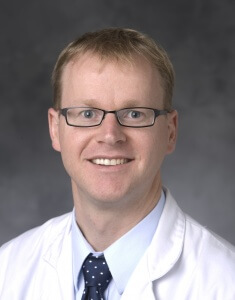

Tori Kinamon Awarded FDA ORISE Fellowship

The Food and Drug Association (FDA) selected Air Force 2nd Lt. Tori Kinamon, MD Candidate at the Duke University School of Medicine, to receive an FDA Antibacterial Drug Resistance (DOOR) Fellowship. The one year fellowship, which begins June 2021, is with the Office of Infectious Diseases Division of Anti-infectives led by Sumanthi Nambiar, MD.

The fellowship evaluates ordinal endpoints using the Desirability of Outcome Ranking (DOOR) approach for anti-infective clinical trials for indications such as hospital-acquired bacterial pneumonia/ventilator-associated bacterial pneumonia (HABP/VABP), complicated urinary tract infections (cUTI), complicated intra-abdominal infections (cIAI) and acute bacterial skin and skin structure infections (ABSSSI). DOOR is an innovative approach used in clinical trials to evaluate the global benefits and risks of an intervention.

The Food and Drug Association (FDA) offers this fellowship opportunity through the Oak Ridge Institute for Science and Education (ORISE).

Thomas Holland Chosen as Presidential Award Team Winner

Thomas L. Holland, MD, MSc

ARLG primary investigator, Thomas L. Holland, MD, is being honored alongside Cameron R. Wolfe, MBBS, and the Division of Infectious Diseases, all with Duke University Hospital, to receive the Presidential Award. Holland, Wolfe, and members of their team were nominated for the award in recognition of their leadership and service efforts to combat the COVID-19 pandemic.

The Presidential Awards represent Duke University’s highest honor and are granted each year to select staff and faculty who personify Duke’s values and legacy. Holland is being recognized for his work leading the COVID-19 in-patient clinical teams and keeping infectious diseases colleagues informed of important COVID-19 challenges. Wolfe led Duke’s Biological and Emergency Preparedness team and served as a Chair of the Atlantic Coast Conference COVID-19 Medical Advisory Group. Their unflagging dedication and effort also included work in community outreach, vaccine development, and infection prevention.

This year’s awards will be presented by Duke University President Vincent Price during a virtual ceremony on April 14. We extend our congratulations to Drs. Holland, Wolfe, and all of the honorees.

Read more

Yohei Doi Promoted to Professor of Medicine

Yohei Doi, MD, PhD

We congratulate Yohei Doi, MD, PhD, on his promotion to Professor of Medicine at the University of Pittsburgh! Dr. Doi is the chair for ARLG’s Gram-Negative Committee which advances research and improves patient outcomes by designing clinical trials for gram-negative infections and mentoring ARLG junior investigators.

Dr. Doi also serves as the Director of the Center for Innovative Antimicrobial Therapy (CIAT) at the University of Pittsburgh as well as the Professor and Chair of Microbiology at Fujita Health University in Aichi, Japan. His primary topics of research include the genetic and molecular basis of emerging antimicrobial resistance mechanisms, inhibitor-based drug discovery, colistin resistance in Acinetobacter baumannii, and the rapid diagnosis of resistance using phenotypic, genetic, and lipidomic approaches.

In Remembrance of John G. Bartlett


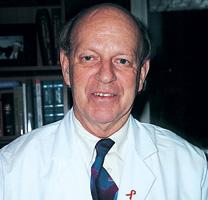
John G. Bartlett, MD

We are deeply saddened to share news of the passing of our mentor, colleague, and friend John Bartlett, M.D. on Jan. 19. John’s career included academic positions at UCLA, Tufts, and Johns Hopkins University where he also helped to establish the Infectious Disease Division and served as its chief for 26 years. His early work demonstrated the connection between C. difficile and antibiotic-related colitis and he was an early pioneer in establishing HIV treatment guidelines. As a renowned expert in many subjects, John’s work had a profound effect on areas including respiratory tract infections, bioterrorism threats, anaerobic pulmonary infections, and antimicrobial resistance.

In addition to the many significant contributions that helped build the ARLG, John designed and led the ARLG mentoring committee in the initial years of the grant. To date, the ARLG mentoring program has provided mentorship and career-development opportunities to more than 45 mentees and has achieved John’s vision to train the next generation of clinician scientists in antibacterial resistance.

Widely remembered for his kindness and generosity, John’s legacy and the impact of his work will continue to benefit and inspire others for generations to come. We extend our heartfelt condolences to John’s family and many friends. Those wishing to make a memorial contribution in honor of Dr. Bartlett can donate a tribute gift to the IDSA Foundation which will be recognized in the IDSA Jean and John G. Bartlett Member Lounge in Arlington, Virginia.

FDA Announces Two ORISE Fellowship Opportunities

The Food and Drug Association announces two Oak Ridge Institute for Science and Education (ORISE) fellowship opportunities. If you or  someone you know are interested in these one-year fellowships, please apply by February 26, 2021. The anticipated start date is June, 2021.

  • FDA Antibacterial Drug Resistance (DOOR) Fellowship
    • The project will evaluate ordinal endpoints using the desirability of outcome ranking (DOOR) approach for anti-infective clinical trials for indications such as hospital-acquired bacterial pneumonia/ventilator-associated bacterial pneumonia (HABP/VABP), complicated urinary tract infections (cUTI), complicated intra-abdominal infections (cIAI) and acute bacterial skin and skin structure infections (ABSSSI).  Under the guidance of a mentor, the selected candidate will perform analysis of the existing database of recently completed antibacterial drug trials to validate ordinal endpoints using the DOOR approach.
    • Apply at: https://www.zintellect.com/Opportunity/Details/FDA-CDER-2021-0617


  • FDA Antibacterial Drug Resistance (cUTI) Fellowship
    • Currently, the primary endpoint for complicated urinary tract infection (cUTI) trials is a composite of clinical and microbiologic outcomes assessed at a fixed time point after completing therapy. In recent clinical trials, it has been noted that while some patients are classified as microbiologic failures due to persistently positive urine culture, however they are doing well clinically such that no further antibacterial therapy is needed. The reasons for this discordance are unclear and need further evaluation. For this project, data from recently completed cUTI trials will be reviewed to assess the degree of discordance between the clinical and microbiologic endpoints, the reasons for the discordance and, based on the data, consideration will be given to revising the endpoint if needed.
    • Apply at: https://www.zintellect.com/Opportunity/Details/FDA-CDER-2021-0618

Vance Fowler Delivers Maxwell Finland Award Lecture on S. Aureus, Career Lessons, and the Importance of Mentors

In October, ARLG co-principal investigator Vance Fowler shared insight from his two decades studying Staphylococcus aureus as part of an IDWeek 2020 lecture titled “Staphylococcus aureus: Lessons Learned from 20 Years with the Persistent Pathogen.” The Finland lecture is awarded each year to someone who has made key contributions in the areas of bacterial pathogenesis, antimicrobial agents, emerging infections, and hospital-acquired infections.

Dr. Fowler began the lecture by discussing his first major lesson: “plans change.” While in residency, he thought his career would be dedicated to studying malaria in East Africa but his mentor, Ralph Corey, MD, suggested he study S. aureus instead. During his residency, he started the S. aureus Bacteremia Group (SABG) that has been central to his career.

“Dream big, start small” was the second major lesson Dr. Fowler highlighted as he described the influential clinical and translational work that has been performed through the SABG over the last 25 years. His group was able to show that patients with S. aureus bloodstream infections now have more comorbidities, higher rates of prosthetic devices, and are more likely to have severe disease with metastatic sites of infection than patients with S. aureus bacteremia 20 years ago. Dr. Fowler discussed how research through the SABG has generated key clinical practice recommendations for treating patients with S. aureus bacteremia. His group led some of the original studies showing the importance of performing echocardiography, consulting infectious diseases, and using the appropriate antibiotics. Each of these interventions was subsequently shown to significantly decrease mortality in patients with S. aureus bacteremia in large datasets and are now considered standard, evidence-based practices.

In the third and fourth major lessons presented, Dr. Fowler shared that even the most thorough bedside evaluation can be limited which is why biorepositories of patient samples can be crucial to answering clinical questions. Dr. Fowler’s lab has been able to use a large biorepository of samples from patients with S. aureus bacteremia to answer important translational question including understanding 1) which patients with S. aureus bacteremia and cardiac devices will develop a cardiac device infection and 2) which patients with methicillin-resistant S. aureus bacteremia will develop persistent bacteremia. Both of these questions were inspired by bedside clinical questions but involved using the biorepository to investigate mechanisms in the pathogen and host response. Dr. Fowler urged other institutions to create similar biorepositories as a way to promote hypothesis-generating and hypothesis-testing research.

Dr. Fowler concluded his lecture by stating that trainees led and published much of the research he presented and emphasized the importance of mentorship. He thanked his mentor, Dr. Ralph Corey, for believing in him and expressed his hope to provide the same support for current infectious diseases trainees.

Article by Jessica Howard-Anderson, MD, MSc

IDWeek 2020 SCOUT-CAP On-Demand Session

IDWeek 2020 is here! One on-demand presentation you won’t want to miss is Session 175:  Pediatric Infections and Immunology. W. Charles Huskins, MD, MSc will discuss his oral abstract titled “Randomized Double-blind Controlled Trial of Short vs. Standard Course Outpatient Therapy of Community Acquired Pneumonia in Children (SCOUT-CAP)”.

“The SCOUT-CAP study uses innovative, clinically intuitive statistical advances to answer a common, important clinical question, ‘How long is long enough?’ for pediatric outpatients responding to their treatment for community-acquired pneumonia.”

— Vance Fowler, MD, MHS


Learn more

See our full list of ARLG presentations here.


Plan Now to Attend Your Top IDWeek 2020 Sessions

IDWeek 2020 is just around the corner! From October 21 – 25, ARLG’s top leaders and experts will be discussing the latest AMR topics. You won’t want to miss this year’s Maxwell Finland lecture presented by Vance Fowler, ARLG co-principal investigator, on October 23.

Use the guide below to plan the rest of your conference sessions.

ARLG at IDWeek 2020

DayTimeSession TitlePresentation TitleModeratorsSpeakers
On Demand
Pediatric Infections and Immunology
Oral Abstract
Randomized Double-blind Controlled Trial of Short vs. Standard Course Outpatient Therapy of Community Acquired Pneumonia in Children (SCOUT-CAP)W. Charles Huskins
Oct. 217:00 - 8:00p.m.The Good, the Bad, and the Ugly During COVID-19 in Latin AmericaCesar Arias
Oct. 218:00 - 9:00p.m. Diagnostics and Therapeutics in Latin AmericaCesar Arias
Oct. 219:15 - 10:15p.mThe COVID-19 Experience — JapanYohei Doi
Oct. 2110:15 - 11:15p.m. The COVID-19 Experience — AsiaYohei Doi
Oct. 2211:00a.m. - 12:15p.m. AmpC beta-lactamase: basics and clinical considerations – Speaker 2AmpC beta-lactamase: basics and clinical considerations Yohei DoiPranita Tamma
Oct. 2211:00a.m. - 12:15p.m. Interactive Session -Diagnostic Clinical CasesKim HansonRobin Patel (panelist)
Christopher Doern (panelist)
Oct. 2211:00a.m. - 12:15p.m. Symposium - Lyme Guidelines: a case based approach to what’s new in diagnosis and treatmentLyme Guidelines: a case based approach to what’s new in diagnosis and treatmentTom Holland Sarah Doernberg, Buddy Creech (panelists); Paul Lantos (speaker)
Oct. 2211:00a.m. - 12:15p.m. Role of Advanced Practitioners in IDCatherine Liu (panelist)
Oct. 2212:30 - 1:45p.m. Symposium - Controversies in CandidaCandida Biofilms: What Makes Them So Bad? David Andes
Oct. 2212:30 - 1:45p.m. Symposium – Epidemiologically David van Duin
Oct. 223:45 - 5:00p.m. Symposium – Clinical Trials that May Change Your PracticeClinical Trials in Bacterial Diseases That May Change Your Practice Tom Holland
Sarah Doernberg
Michael Satlin
Oct. 225:15 - 6:30p.m.Bad Bugs – Any DrugsRobert Bonomo
Sara Cosgrove
David Paterson (panelist)
Pranita Tamma (panelist)
Oct. 2310:00 - 11:15a.mChallenging cases in Infectious DiseasesHenry Chambers
Oct. 2310:00 - 11:15a.mRisk of infective endocarditis in patients with bacteremiaStaphylococcus aureus bacteremiaVance Fowler Jr.
Oct. 2311:30a.m. - 12:45p.mSTIs When First-line Therapy FailsTom Holland
Oct. 2311:30a.m. - 12:45p.mTherapeutic ControversyBL/BLI for ESBL Producers – a Bad IdeaDavid Paterson
Oct. 2311:30a.m. - 12:45p.m. “It is All in Your Head”...or Is It?: Delusions, Factitious Disorders and True ID Diagnosis That Look Like ThemLilian Abbo (panelist)
Oct. 232:45 - 4:00p.m. Scientific merits and practical considerations for site-specific susceptibility testingImplementation HurdlesAmy Mathers
Oct. 232:45 - 4:00p.m. New Kids on the Block: Antifungal Drug PipelineDavid Andes
Oct. 234:15 - 5:30p.m. Antimicrobial Stewardship Challenges in Transplant Infectious DiseasesDifficult Diarrhea: C. difficile in Complex, Antibiotic Treated Transplant PatientsChristopher Polage
Oct. 234:15 - 5:30p.m. Current management of Pediatric Neuroinflammatory Disorders: Show me the DataLoren Miller
Oct. 234:15 - 5:30p.m.
On Demand
Designing and implementing clinical trials that inform clinical practiceClinical Trials to Inform Antimicrobial StewardshipYohei Doi Nick Daneman
Oct. 234:15 - 5:30p.mUpdate on Novel Approaches to Antimicrobial Susceptibility TestingRapid Phenotypic Susceptibility Testing Assays
Targeted Molecular Panels for Resistance Detection
Using Whole Genome Sequencing for Prediction of Resistance
Ritu BanerjeePatricia Simner
Lars Westblade
Oct. 234:15 - 5:30p.mHot Topics in Pediatric Infectious DiseasesUpdates on Staphylococcus aureus Infections, Treatment and PreventionRitu BanerjeeStephanie Fritz
Oct. 235:30 - 6:45p.m.
All Channels
Maxwell Finland Lecture
Featured Speaker
Staphylococcus aureus: Lessons Learned from 20 Years with the Persistent PathogenVance G. Fowler
Oct. 2410:00 - 11:15a.m. Antibiotic Stewardship in Unique Clinical SettingsAntibiotic Use in the Emergency Department/Urgent Care CentersLarissa May
Oct. 241:15 -3:00p.m. Clinical Controversies in S. aureus Bacteremia Management and PreventionCombination Therapy for SAB: Who, What When
Decolonization as a S. aureus Bacteremia Prevention Strategy
Tom HollandSara Cosgrove
Oct. 259:30 – 11:00a.m. Optimizing the diagnosis and management of infective endocarditisJose Miro

Vance Fowler Selected to Present Maxwell Finland Lecture at IDWeek 2020

Vance G. Fowler, Jr., MD, MHS
Vance Fowler, MD, MHS
ARLG Co-Principal Investigator

Vance Fowler, MD, MHS, ARLG co-principal investigator, will be this year’s featured speaker presenting the Maxwell Finland lecture at IDWeek 2020. The topic of the lecture will be “Staphylococcus aureus: Lessons Learned from 20 Years with the Persistent Pathogen.”

During his presentation, Dr. Fowler will provide an expert perspective on Staphylococcus aureus and discuss the impact that a single project can have on improved patient outcomes. He will also cover the importance of clinical, bacterial, and host genetic factors in influencing the initiation and severity of infections caused by S. aureus. The session is scheduled to take place on October 23 at 5:30 p.m.

The lecture is named in honor of IDSA’s first president, Maxwell Finland, MD, DSci, who was internationally recognized for his work on the incidence and character of infectious diseases and their treatments. The Finland lecture is typically awarded to someone who has contributed to the areas of bacterial pathogenesis, antimicrobial agents, emerging infections, and hospital-acquired infections.

ARLG study helps physicians rapidly determine whether antibiotics will be effective against certain bacterial infections

A recent study supported by the Antibacterial Resistance Leadership Group, (ARLG) called The Randomized Clinical Trial Evaluating Clinical Impact of RAPid Identification and Antimicrobial Susceptibility Testing for Gram-Negative Bacteremia (RAPIDS-GN) was recently published in Clinical Infectious Diseases. This is the largest study to evaluate the clinical impact of rapid blood culture diagnostics in the management of patients with Gram-negative bacilli bloodstream infections.

RAPIDS-GN results demonstrate that providing rapid, accurate drug susceptibility information to physicians could improve the care of patients with sepsis, a potentially life-threatening condition caused by the body’s response to an infection.

According to the study’s principal investigator, Ritu Banerjee, MD, PhD, associate professor of pediatrics at Monroe Carell Jr. Children’s Hospital at Vanderbilt, time is of the essence.

“Patients are placed on a standard course of antibiotics when they initially present with possible sepsis,” said Banerjee. “These antibiotics may be ineffective, or conversely, too broad-spectrum. Conventional culture and susceptibility testing methods take days for results to identify the bacteria and drug resistance. Instead of waiting days for results, we can now get them in hours.”

The RAPIDS-GN study receives financial and operations support from the ARLG. The study aligns well with the mission of the ARLG, which is to prioritize, design, and execute clinical research that will reduce the public threat of antibacterial resistance. The ARLG Coordinating Center is housed at the Duke Clinical Research Institute. The study was conducted at the Mayo Clinic and the University of California, Los Angeles.

Banerjee and her ARLG colleagues sought a way to shorten the wait time until the appropriate medication could be started to treat the infection.

RAPIDS-GN, is the first multicenter, prospective, randomized controlled trial to compare the outcomes of patients with Gram-negative bloodstream infections who had blood culture testing with standard-of- care culture and antibiotic susceptibility testing versus rapid organism identification and phenotype antibiotic susceptibility testing.

The study looked at the outcomes of 448 patients — 226 received conventional care while 222 were randomized to the new testing method.

The rapid organism identification and phenotype antibiotic susceptibility testing used the Accelerate Pheno System. Conventional testing can take two to three days before the bacteria in the blood and its drug resistance are fully identified. Utilizing the rapid testing method gave medical teams final results in about 12 hours.

“The time to results was significantly shorter,” said Banerjee. “The median time to the first antibiotic change was 24 hours faster in the rapid testing arm compared to the control arm. We can now tailor the antibiotics more quickly and place patients on pathogen-directed therapy rather than broad-spectrum, empiric therapy.”

“This was a very positive result. It was proof that faster actionable results led to timelier, targeted antibiotic therapy. The hope is that this, in turn, leads to better patient outcomes, less unnecessary broad-spectrum antibiotic use, and less emergence of drug resistant organisms.”

Banerjee also hopes the study results prompt more diagnostic companies to continue the development of platforms that will enable more rapid bacterial identification and resistance detection.

“One of the challenges is the cost of the testing, because rapid testing methods are more expensive than conventional methods,” she said. “The overarching goal is to improve outcomes for patients with sepsis.”

The study was presented during the IDWeek conference on Oct. 3 in Washington, D.C.

The research was supported by the National Institute of Allergy and Infectious Diseases of the National Institutes of Health under Award Number UM1AI104681. The content is solely the responsibility of the authors and does not necessarily represent the official views of the National Institutes of Health.

Note: This news item was modified from an original announcement in the VUMC Reporter.