
Editorial by Henry Chambers, Vance Fowler Highlights Strategic One Health Approach to Address Antimicrobial Resistance

An editorial titled “Confronting Antimicrobial Resistance Together” by Henry Chambers, MD, and Vance Fowler, MD, was published in the November issue of the American Journal of Physiology – Lung Cellular and Molecular Physiology. The article reinforces the theme of World Antimicrobial Awareness Week 2022, “Preventing Antimicrobial Resistance Together,” and emphasizes the importance of One Health, a unified, transdisciplinary approach that aims to improve health outcomes by recognizing the interconnectivity of humans, animals, and our shared environments.

Drs. Chambers and Fowler use the COVID-19 pandemic as a key example of the need for a One Health approach to antimicrobial resistance (AMR). In 2020, COVID-19 deaths surpassed the number of deaths caused by the “Big Three” infectious diseases: tuberculosis (TB), HIV-AIDS, and malaria. The authors discuss how progress in the prevention and treatment of these illnesses was disrupted by the pandemic, and suggest that COVID-19 likely exacerbated AMR. Prescribing of antibiotics to patients without a bacterial infection, increases in hospitalizations, and overwhelmed diagnostic laboratories, among other factors, potentially could lead to increased rates of AMR.

The year before COVID-19 emerged, AMR was associated with 4.95 million deaths worldwide, putting this public health concern on par with TB, HIV, and malaria, and potentially even greater. Both COVID-19 and AMR are systemic, global health problems, and many of the same interventions utilized for COVID-19 and other infectious diseases are also effective in addressing bacterial AMR. For example, vaccines to prevent respiratory illnesses like COVID-19 and the flu can reduce hospitalizations and the over-prescribing of antibiotics to treat viral illnesses.

In addition to the misuse of antibiotics in humans, the article points to agricultural use of antibiotics as an area of particular concern for AMR. Approximately 73% of antimicrobials sold globally are given at low doses to animals used for food, creating an ideal environment for the development of drug-resistant bacteria. Organisms carrying resistance genes could be transferred to humans through food chains, to the environment through animal waste, and to other human pathogens, potentially disrupting fragile ecosystems and harming human health. A One Health approach to preventing AMR is especially important as population growth increases our interactions with other humans and animals.

Read the article in the American Journal of Physiology – Lung Cellular and Molecular Physiology.

 

ARLG Spotlight – Heather King, PhD


Heather A. King, Ph.D.
Research Health Scientist, Durham VA Health Care System, Health Services Research and Development, Center of Innovation to Accelerate Discovery and Practice Transformation (ADAPT)
Assistant Professor, Department of Population Health Sciences and Division of General Internal Medicine, Duke University School of Medicine

About my role in the ARLG

For more than six years, I have had the opportunity to lead several ARLG patient-reported quality-of-life (QoL) studies on bacterial infections alongside wonderful ARLG collaborators like Drs. Thomas Holland, Sarah Doernberg, and Jessica Howard-Anderson. I also feel privileged to be part of ARLG’s Innovations Working Group under the leadership of Dr. Helen Boucher and to be a member of the Health-Related Quality of Life (HRQoL) Task Force. In addition, I provide expertise on study design and methodology to our U.S. and global colleagues.

About my work on QoL studies

We began our research in bloodstream infection and have expanded our work to address patient-reported HRQoL and its measurement across four major infectious syndromes which include complicated urinary tract infection (cUTI), acute bacterial skin and skin structure infection (ABSSSI), hospital acquired/ventilator associated bacterial pneumonia (HABP/VABP), and complicated intraabdominal infection (cIAI).

Current achievements and goals for this research

In July 2021, we produced a publication on patient-reported HRQoL in Clinical Infectious Diseases called Patients’ Experiences With Staphylococcus aureus and Gram-negative Bacterial Bloodstream Infections: A Qualitative Descriptive Study and Concept Elicitation Phase To Inform Measurement of Patient-reported Quality of Life.

We first presented the work that led to this publication at the Academy Health Annual Research Meeting. The review committee selected the corresponding abstract for best poster for the patient-centered research theme and nominated it for the overall ARM best poster award. We also published a second paper in Open Forum Infectious Diseases, Patients’ Experiences With Staphylococcus aureus and Gram-Negative Bacterial Bloodstream Infections: Results From Cognitive Interviews to Inform Assessment of Health-Related Quality of Life.

As reported in this paper, we developed a customized survey based on well-established patient-reported outcome measures for bloodstream infections that captures what matters most to patients as they recover. I have consulted with colleagues in the U.S. and overseas to guide their use of the survey and our measurement strategy. In addition to informing our current work, the survey is now part of an ongoing U.S. clinical trial.

We are currently conducting four systematic reviews of health-related quality of life measurement in patients with cUTI, ABSSSI, HABP/VABP, and cIAI. We are also performing a syndrome-specific qualitative secondary analysis of patients’ bloodstream infection experiences. These papers in development, along with others, will comprise a supplement on the importance of listening to, learning from, and leveraging patients’ perspectives of their HRQoL to create patient-centered antibacterial trials. In addition, we are comparing patient and clinician perspectives of patient health-related quality of life in cUTI.

Why is this research important?

Engaging patients is crucial to developing treatments for bacterial infections. It is important to capture outcomes that reflect what matters most to patients as they recover.

Our work informs the measurement of patient-reported HRQoL in studies for new antibacterial agents. By incorporating these patient-reported outcome measures into clinical trials, we learn valuable information about the patients’ perspectives on the effects of an intervention including how it influences function across a variety of life domains.

What do you enjoy most about being part of the ARLG?

The network is a strong proponent of incorporating the patient perspective in research on bacterial infections and antibacterial resistance. I greatly appreciate the network’s leadership in the specific area of patient-reported health-related quality of life and its measurement. The research our team has conducted with the support of ARLG is both significant and innovative. I am also very thankful to Drs. Vance Fowler, Henry “Chip” Chambers, and the ARLG as a whole for providing valuable mentorship and great opportunities that have advanced my career as well as the science of antimicrobial resistance.


Helen Boucher Cites Progress and Perils Fighting Antimicrobial Resistance

Helen Boucher, MD, FIDSA

ARLG investigator, Executive Committee Member, and Innovations Working Group Chair, Helen Boucher, MD, FACP, FIDSA, spoke with Contagion about current challenges and progress in combatting antimicrobial resistance (AMR). She sat for the video interview after delivering her Maxwell Finland Lecture,  “Running to Stand Still: Progress and Perils with AMR” at IDWeek 2022. “It [AMR] affects every one of us—you, me, our children—and I think it’s still not really understood and really embraced by many as a problem that affects them today,” says Dr. Boucher. Limited awareness about AMR, lack of antibiotics, and a gap in surveillance data to understand the extent of AMR in the United States are some of her primary concerns.

However, Dr. Boucher says she is encouraged by the progress being made to address AMR. The AMR Action Fund, a public-private collaboration, is investing $1 billion dollars to develop two to four new antibiotics by 2030. She also points out that 2019 CDC data shows infection prevention and stewardship have led to a decrease in some areas of resistance in hospitals.

Watch Dr. Boucher’s 2-minute interview on the Contagion Live website.

From Data to Delivery ARLG Has You Covered


As part of our mission to support research and combat the threat of antimicrobial resistance, ARLG provides resources that may help researchers improve their data, access specific bacterial strains, or secure funding for innovative study ideas. Learn more about each type of resource and how to request it below.


Concept Proposal

ARLG accepts proposals for novel clinical studies that require funding or other resource support. Investigators who have some external funding available may submit requests for partial funding.

Proposed studies must prioritize gram-negative infections, gram-positive infections, and/or diagnostics. Ideal candidates for concept proposals:

  • Have the potential to transform medical practice by improving use of antibiotics and/or impacting antibacterial resistance
  • Would be unlikely to occur without ARLG support.

ARLG scientific committees review concept proposal requests for merit, feasibility, and novelty. They also evaluate whether the proposed research meets ARLG’s mission “To PRIORITIZE, DESIGN, and EXECUTE clinical research that will impact the prevention, diagnosis, and treatment of infections caused by antibiotic-resistant bacteria.”

Proposal requests must include the research question, rationale, primary hypothesis, planned endpoints, study population, and sample size. If the scientific committees accept a concept proposal, they will ask the principal investigator to submit to a more detailed proposal, which will go to the ARLG Executive Committee for further consideration or approval.

Go to ARLG.org/protocol-concept/  for more guidance.
Select the Submit your Proposal button to apply.


ARLG Study Data Request

ARLG advances clinical research and scientific knowledge by sharing final data generated from NIH-supported studies with researchers to help further their study initiatives. The data can include information from single or combined studies.

 ARLG’s Data Sharing Committee Chair and other experts review study data applications to determine if the information requested will meet the objectives of the analysis. If the study results are pending primary publication to a peer review journal, the committee chair will hold the data until submission.

The data request must include the research description, objectives, rationale, as well as an explanation of how the data will meet the study objectives, and an analysis plan that includes power calculations and statistics. The requestor must also be able to demonstrate that they have the expertise to perform the analysis, including whether statistical assistance is available.

Go to ARLG.org/request-data/ to learn more.
Click the Request Data button to submit an application.


Data Analysis Request

Researchers with a novel research idea can request to have the Statistical Data Management Center (SDMC) perform an analysis on data from an ARLG study or studies.

The SDMC reviews data analysis requests for feasibility and merit. The ARLG Publications Chair, an ARLG Review Panel, and the ARLG Executive Committee may also review requests to determine viability.

The analysis request must include the research description, objectives, and rationale along with an explanation of how the data will meet the study objectives.

Go to ARLG.org/statistical_and_data_management_center/ to learn more about the SDMC.
Go to ARLG.org/request-data/ and use the Request Data button to create a data analysis request.


Bacterial Strain Request

ARLG’s Laboratory Center manages a biorepository of clinical study isolates and well-characterized gram-positive and gram-negative bacterial isolates from published manuscripts. Researchers can request bacterial isolate strains to develop diagnostic tests and novel antimicrobial compounds or to conduct studies evaluating mechanisms of resistance.

Researchers can review available isolate strains by using ARLG’s online Biorepository Strain Catalogue and request up to 80 strains per year for each laboratory or company. ARLG’s Laboratory Center director will review requests for larger numbers of isolates or those not yet published by ARLG.

You may review available strains by visiting the Biorepository Strain Catalogue.
To request isolates (strains), please apply using the ARLG Interest Survey.


Helen Boucher Awarded IDWeek 2022 Maxwell Finland Lecture

Helen Boucher, MD, FIDSA

ARLG investigator, Executive Committee Member, and Innovations Working Group Chair, Helen Boucher, MD, FACP, FIDSA, will present this year’s Maxwell Finland Lecture during IDWeek 2022 in Washington, D.C. Her presentation, “Running to Stand Still: Progress and Perils with AMR”, will highlight the key drivers of antimicrobial resistance and the potential incentives of drug and diagnostic development to treat and detect antimicrobial-resistant infections.

Dr. Boucher is the director of the Tufts Center for Integrated Management of Antimicrobial Resistance and the director of the Infectious Diseases Fellowship Program at Tufts Medical Center. Dr. Boucher has held several other leadership positions in the field of infectious diseases and has authored or co-authored numerous publications. Her research focuses on

The Maxwell Finland Lecture is awarded annually to experts who have contributed to the areas of bacterial pathogenesis, antimicrobial agents, emerging infections, and hospital-acquired infections. It is named in honor of IDSA’s first president, Maxwell Finland, MD, DSci, who was internationally recognized for his work on the incidence and character of infectious diseases and their treatments.

Dr. Boucher will deliver her lecture on Thursday, October 20 at 9:15 a.m. It will be available after the event on-demand through March 2023.


Read more

See the full list of IDWeek 2022 ARLG presenters


IDWeek 2022: Featured ARLG Sessions and Posters

It’s that time of year again! Many of ARLG’s top leaders and experts will be at IDWeek 2022 discussing the latest AMR topics. Whether you are attending virtually or in person, plan ahead to join your favorite sessions.

Be sure you catch this year’s Maxwell Finland Lecture delivered by ARLG primary investigator, Helen Boucher, MD, FACP, FIDSA, on October 20. Use the guide below to find more exciting sessions and posters you won’t want to miss.

Learn more and view OnDemand content at IDWeek.org

IDWeek 2022 ARLG Sessions

DayTime (EDT)Session TitlePresentation titleModeratorsSpeakers
Oct. 1811:30 am - 12:30 pmPW02 - Best Practices for Antibiotic Stewardship ProgramsPseudomonas aeruginosa and Enterobacter cloacae: Our Unsung NemesesPranita Tamma
Oct. 182:25 - 3:40 pmPW02 - Best Practices for Antibiotic Stewardship ProgramsPro-Con Debate: FQ Prophy in HCTGhady Haidar
Oct. 183:00 - 4:00 pmPW03 - Research Training Programs, Careers and Grant Writing Strategies for ID Physician-ScientistsAdditional Funding Opportunities Outside of NIH Presentations with Q&ASara Cosgrove
Oct. 1910:45 am - 12:00 pmPW04 - Fellows' Day WorkshopCareers in ResearchCesar Arias
Oct. 208:00 – 9:00 am10- Effective Collaborations Between Stewards and the Microbiology LaboratoryPranita Tamma
Oct. 208:00 – 8:30 am10- Effective Collaborations Between Stewards and the Microbiology LaboratoryHow Stewards Can Transform the Science of Antibiotic Breakpoints Into Clinical Practice RecommendationsAmy Mathers
Oct. 208:00 – 9:00 am18 - New Antimicrobials and ID Diagnostics in the Pipeline - BacterialCesar Arias, David van Duin
Oct. 209:15 – 10:00 am19 - Maxwell Finland LectureRunning to Stand Still: Progress and Perils with AMRHelen Boucher
Oct. 2010:30 – 11:45 am21 - Diagnostic Clinical CasesJennifer Dien Bard (panelist)
Oct. 2010:30 – 11:45 am22 - Clinical Trials That May Change Your PracticeThomas Holland
Oct. 2011:20 – 11:45 am29 - What's New in Fungal Therapeutics and Diagnostics in Transplant?Antifungal Susceptibility Testing ChallengesMariana Castanheira
Oct. 2010:30-11:45 am32 - MDROs Across the SpectrumAnthony Harris
Oct. 201:45-3:00 pm71 - Circadian Clock, Hormones and Host Defenses Against InfectionsAnne-Catrin Uhlemann
Oct. 201:45-3:00 pm78 – Antimicrobial Clinical Trials (Bacterial and Viral)Pranita Tamma
Oct. 203:15-4:30 pm89 - New Battles With Old Foes: Addressing Syphilis and Drug-Resistant Neisseria gonorrheaAnne-Catrin Uhlemann
Oct. 203:15-4:30 pm95 - Diagnostic Stewardship for Common SyndromesSonali Advani
Oct. 218:00 – 8:30 am104 - Overdiagnosis of Infections: Cracking the Code!The Urine StorySonali Advani
Oct. 218:00 – 8:30 am105 - Slow and Steady: Insights Into Nontuberculous Mycobacteria and TreatmentAnne-Catrin Uhlemann
Oct. 218:00 –8:30 am106 - Still the One? Debating Vancomycin as First Line MRSA Agent in New Era of AUC/MIC Dosing and MonitoringPro-Vancomycin Is Still the OneMarc Scheetz
Oct. 218:00 –9:00 am110 - New Antimicrobials and ID Diagnostics in the Pipeline - DiagnosticsAngela Caliendo
Oct. 2110:30-11:45 am114 - Clinical Controversies in the Treatment of S. aureus BacteremiaThomas Holland
Oct. 2110:30-11:45 am115 - Ditching the Dogma: Antimicrobial Stewardship Myth BustersPranita Tamma
Oct. 2110:55-11:20 am115 - Ditching the Dogma: Antimicrobial Stewardship Myth BustersMyth: Trimethoprim-Sulfamethoxazole Is Not Effective for the Treatment of Skin and Soft Tissue Infections Involving Beta-Hemolytic StreptococciSarah Doernberg
Oct. 2112:15-12:45 pm157 - Rapid Fire Poster Session: Updates in DiagnosticsPatricia Simner
Oct. 211:45-3:00 pm163 - Double Trouble: How Viruses and Bacterial Interactions Affect the Pathogenesis of PneumoniaAnne-Catrin Uhlemann
Oct. 212:35-3:00 pm166 - Hot Topics in Pediatric Infectious DiseasesThe Role of the Microbiome in Childhood InfectionsMatthew Kelly
Oct. 211:45-3:00 pm167 - Improving the Identification of SepsisThe Stewardship of Sepsis: A Report From the IDSA Sepsis Task ForceSara CosgroveSara Cosgrove
Oct. 211:45-2:10 pm170 - What the Big Beasts of Hospital Epidemiology and Antimicrobial Stewardship Did During COVID-19MDROs in the COVID EraRobert Bonomo
Oct. 211:45-3:00 pm171 - Endocarditis & BSIDavid van Duin
Oct. 211:45-3:00 pm175 - Updates in DiagnosticsAhmed Babiker
Oct. 213:15-4:30 pm179 - Bad Bug, Bad Bugs: Whatcha Gonna Do (2.0)?Ample Choices? Prescribing Considerations for AmpC β-lactamase-producing Enterobacterales (AmpC-E)Judith Anesi
Oct. 213:15-4:30 pm180 - Behind the Curtain: New Insights Into the Pathogenesis of Candida InfectionsAnne-Catrin Uhlemann
Oct. 213:15-4:30 pm181 - Follow-Up Blood Cultures in Bloodstream Infection: Who Needs 'Em?Thomas Holland
Oct. 213:15-4:30 pm185 - Promise and Perils of New Beta-Lactam AgentsYohei Doi
Oct. 214:05-4:30 pm185 - Promise and Perils of New Beta-Lactam AgentsConsiderations in the Micro LabJennifer Dien Bard
Oct. 228:00-9:00 am193 - Finding the Needle in the Haystack: New Biomarkers of InfectionsAnne-Catrin Uhlemann
Oct. 228:00-9:00 am195 - Oral Treatment of Osteoarticular Infections, Bacteremia and EndocarditisBusting 75 Years of ID Myths: Oral Antibiotic Therapy for Osteomyelitis, Bacteremia and EndocarditisBrad SpellbergBrad Spellberg
Oct. 2210:30-11:45 am209 - Putting the Value of ID Into PracticeCase VignetteCesar Arias
Wrap Up and Q&A
Oct. 221:45-3:00 pm249 - Disarming Bacterial Destruction: Toxins as Therapeutic TargetsAnne-Catrin Uhlemann
Oct. 221:45-3:00 pm254 - Optimizing Stewardship Interventions in Challenging PopulationsPranita Tamma
Oct. 222:35-3:00 pm255 - Perfectionism and the Fear of FailureLeadership, Perfectionism and ExpectationsLatania Logan
Oct. 223:15-4:30 pm263 - Knocking Out the Nonfermenters: Focus on Treatment Through Case ReviewYohei DoiMichael Satlin (Panelist)
Oct. 223:40-4:05 pm267 - 2022 IDSA Guideline UpdateIntra-Abdominal InfectionsRobert Bonomo
Oct. 224:05-4:30 pm267 - 2022 IDSA Guideline UpdateIDSA Guidance on the Treatment of Antimicrobial-Resistant InfectionsPranita Tamma


IDWeek 2022 ARLG Posters

Day, TimeNumberTitleAuthors
Oct. 22
12:15-1:30 pm
229Molecular and Clinical Epidemiology of Carbapenem-resistant E. coli isolates from different global regions (CRACKLE-2)Boutzoukas AE, Komarow L, Chen L, Baum K, Fowler V, Arias C, Hill C, Hanson B, Kreiswirth B, Wang M, Paterson D, Bonomo R, van Duin D
Oct. 22
12:15-1:30 pm
232Population Pharmacokinetics (PopPK) of Ceftazidime-Avibactam (CZA) in Combination with Aztreonam (ATM) in a Phase I, Open-Label Study in Healthy Adult Subjects (COMBINE)Lodise TP, O'Donnell JN, Balevic S, Liu X, Gu K, George J, Raja S, Zaharoff S, Schwager N, Fowler VG Jr., Chambers HF; Antibiotic Resistance Leadership Group
Oct. 22
12:15-1:30 pm
233Safety of Ceftazidime-Avibactam (CZA) in Combination with Aztreonam (ATM) in a Phase I, Open-Label Study in Healthy Adult Subjects (COMBINE)Lodise TP, O'Donnell N, Raja S, Balevic S, Guptill J, Schwager N, Zaharoff S, Fowler VG Jr., Ghazaryan V, Beresnev T, Wall A, Wiegand K, Chambers HF, Antibiotic Resistance Leadership Group

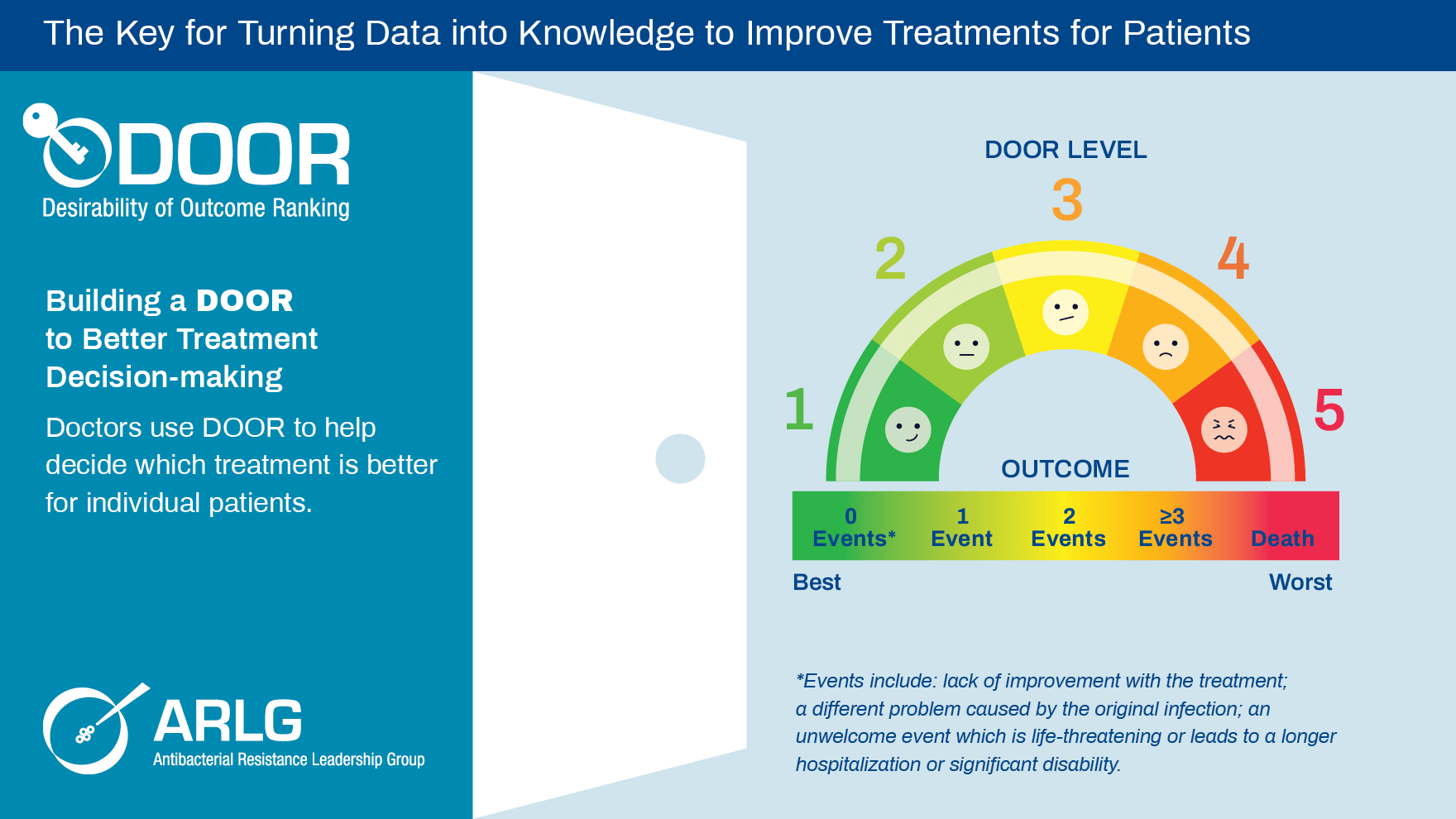
ARLG DOOR Turns Data Into Knowledge — Opens Opportunities to Improve Patient Treatment Plans

ARLG’s Desirability of Outcome Ranking (DOOR) is a novel paradigm for the design, analysis, and interpretation of clinical trials that allows doctors to create better treatment strategies by giving them a way to review data and compare the risks and benefits of different interventional options. Doctors can then discuss the pros and cons for each option and tailor the strategy to fit the patient.

Scott Evans, PhD, developed this innovative paradigm with support from members of ARLG’s Statistical and Data Management Center (SDMC) Toshimitsu (Toshi) Hamasaki, Lauren Komarow, and Carol Hill. The goal of DOOR is to give doctors and researchers a method for informed therapeutic selection based on a comprehensive patient-centric benefit-risk evaluation. Researchers can apply DOOR’s paradigm to the design, data monitoring, and analyses of any clinical trial or observational study to evaluate the patient experience and guide therapeutic decision-making.

Scott Evans, PhD

ARLG researchers first used DOOR in clinical studies for antimicrobial resistance, but now teams are benefitting by applying DOOR to studies in other disease areas such as COVID-19, tuberculosis, melioidosis, pulmonary artery disease, stroke prevention, status epilepticus, and maternal-fetal medicine.

Building a DOOR to Better Treatment Strategies

For doctors, the most important “real world” application of clinical trial data is to determine which therapeutic option is best for each patient. However, since randomized trial outcomes do not provide a clear way to review and compare data on patient-reported experiences, they often fail to provide the necessary evidence to inform day-to-day medical decision-making.

DOOR helps improve the real world applications of clinical trial data by correcting the usual arithmetic of analyzing outcomes separately. Instead of using patients to analyze outcomes, DOOR uses outcomes to analyze patient experiences.

DOOR bases therapeutic evaluations on a comprehensive assessment of patient-centric benefits and harms, which helps doctors address the most important clinical questions on the comparative value of interventions as they pertain to specific patients.

By providing a way to transcend this obstacle, DOOR advances the goal for more research studies yielding practical data doctors and patients can use to answer real world questions.

A DOOR for More Streamlined Study Data

ARLG researchers have used DOOR to enhance many completed studies.

  • CRACKLE I Study — illustrated that ceftazidime-avibactam was superior to colistin in the treatment of pneumoniae carbapenemase–producing CRE infections based on benefit-risk evaluations.
  • PROVIDE Study — illustrated that higher vancomycin doses, presumed to be more efficacious were not more efficacious and caused more acute kidney injury than lower doses in hospitalized patients with methicillin-resistant Staphylococcus aureus (MRSA) bacteremia.
  • SCOUT-CAP Trial — concluded that among children responding to initial treatment for outpatient CAP, a 5-day antibiotic strategy was superior to a 10-day strategy.
  • TRAP Trial — compared azithromycin treatment vs. placebo in outpatient adults with suspected lower respiratory tract infections and low procalcitonin levels.

Some current studies that incorporate DOOR include:

  • Dalbavancin as an option for treatment of aureus bacteremia (DOTS) clinical trial — a multicenter, randomized, assessor-blinded, superiority trial comparing two doses of dalbavancin with 4–8 weeks of standard intravenous antibiotic therapy for completion of therapy in patients with diagnosed with complicated S. aureus bacteremia, including definite or possible right-sided infective endocarditis, who have been treated with effective antibiotic therapy and with subsequent clearance of bacteremia prior to randomization to study treatment.
  • ARLG’s PHAGE Trial — a multi-center, randomized, double-blind, placebo-controlled trial of bacteriophage therapy in cystic fibrosis patients colonized with pseudomonas aeruginosa. DOOR is currently being used for the design, data monitoring and analysis of the study.

Through the DOOR: the Future of Trial Data

Although DOOR is already improving clinical trial conduction and the usability of data today, the paradigm has the potential to influence and advance the execution of research well into the future.  The Council for International Organizations of Medical Sciences is planning the release of a report on benefit-risk evaluation with recommendations that include DOOR concepts.

In order to improve access to DOOR, members of the ARLG team are currently building a series of interactive online tools that will help doctors and researchers easily conduct DOOR analyses and review the results. They are also developing similar tools that will help analyze the desirability of outcome ranking for the management of antimicrobial therapy (DOOR MAT) which is an analogue to DOOR for the design and analysis of diagnostic studies.


Tori Kinamon Featured on PFID Faces of AMR Series

Tori Kinamon

In June, the Partnership to Fight Infectious Disease (PFID) featured a profile of ARLG fellow Tori Kinamon whose journey surviving a methicillin-resistant Staphylococcus aureus (MRSA) infection inspired her to pursue a career as an infectious diseases physician and researcher.

The profile is part of PFID’s Faces of AMR series, which strives to raise awareness of antimicrobial resistance (AMR) by sharing stories of people who have battled this public health threat.

Tori’s journey began during a gymnastics team competition when she was a freshman at Brown University. Her team won the championships, but in the days that followed Tori began to feel increasing pain and swelling in her left leg along with flu-like symptoms. A visit to the emergency room revealed an abscess in her hamstring that eventually required eight surgeries, more than a month in the hospital, and antibiotic treatment for a MRSA infection that almost necessitated the amputation of her leg.

After trying several antibiotic treatment options, doctors found one that was effective, but later discovered that Tori’s kidneys did not tolerate it well. Luckily, Tori’s hospital had another antibiotic option available, daptomycin, which treated her infection without affecting her kidneys.

“I reflect quite frequently on how having that one extra drug in the stockpile had a significant impact on my outcome,” Tori said.

Tori’ s experience with AMR fueled a passion to advance infectious diseases treatment and research. Today, she is an MD Candidate at the Duke University School of Medicine and a recipient of the FDA Antibacterial Drug Resistance (DOOR) Fellowship. Tori has contributed her insight previously to educational presentations and articles including a July 2021 WebMD feature along with Vance Fowler, MD regarding the effect of the COVID-19 pandemic on AMR.


Read Tori’s full story on PFID’s Faces of AMR here.

April 2022

This issue features exciting announcements including Robin Patel’s 2022 Hamao Umezawa Memorial Award, Robert Bonomo’s new role as Director of the Coordinating Center for VA SHIELD, and Melinda Pettigrew’s new role as interim Dean of the Yale School of Public Health. Get updates on Post-ECCMID Day, COMBACTE GA, and other events.